Xiaomi Redmi Note 17 Pro Max review
Verdict
In-depth review of the Xiaomi Redmi Note 17 Pro Max
Introduction, specs, unboxing
Introduction
The global versions of the Redmi Note 17 models are coming out earlier this year, with a clear shift in focus from power to battery autonomy. Today we are going to explore the most beefed-up one, the Redmi Note 17 Pro Max.
But first, you might wonder: what happened to the Redmi Note 16? The answer is pure marketing strategy - when Xiaomi skipped the '16' generation for its flagship line to align with the iPhone 17, the Redmi Note lineup skipped from 15 directly to 17 to maintain the internal series alignment as well.
The Redmi Note 17 Pro Max is the top-tier model of the new family, offering the most premium set of features - the coolest design, the fastest chip, the best cameras, and the largest battery.
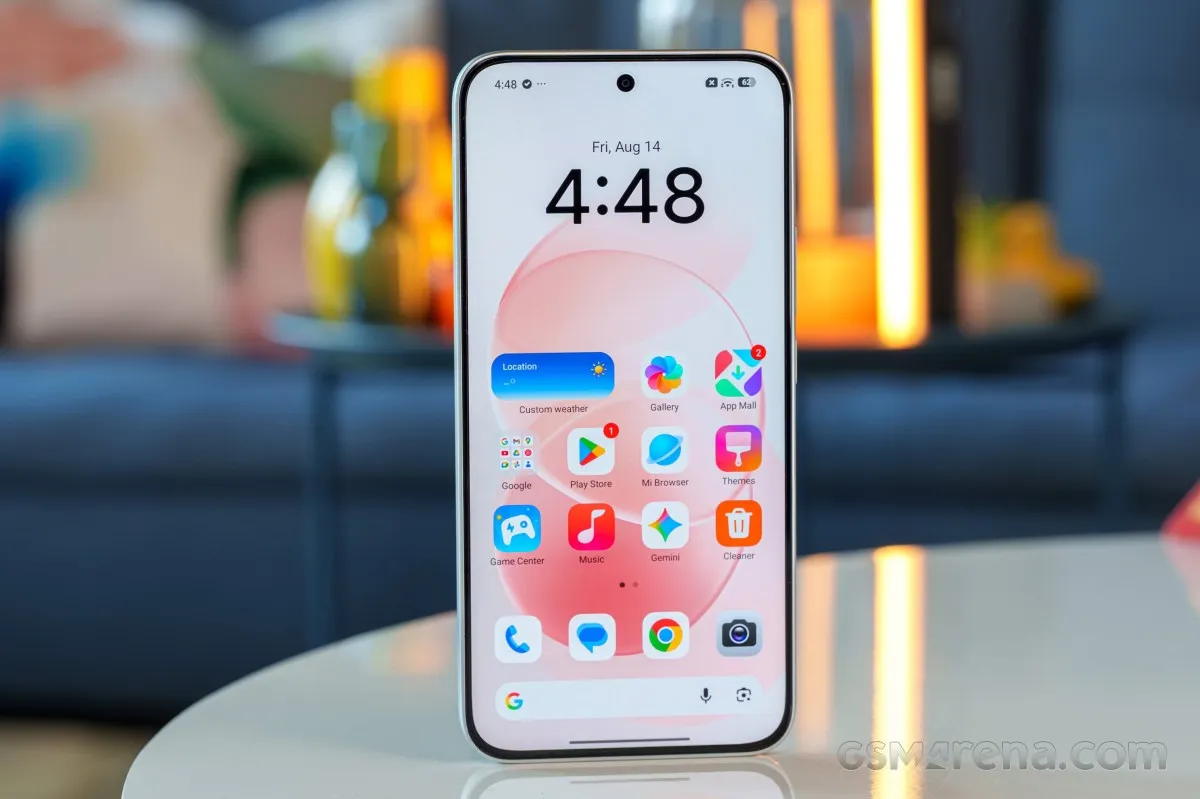
The Note 17 Pro Max keeps the screen of the Redmi Note 15 Pro and Pro+ - a 6.83-inch AMOLED with 1,280p resolution, 120Hz refresh rate, 68B colors, HDR10+ and Dolby Vision streaming support. Its peak brightness is now up to 3,500nits.
The Max model employs the Snapdragon 6 Gen 5 (4nm) chipset, which feels like a performance step down compared to previous Pro+ models as Xiaomi focuses on durability and battery life. Memory configurations feature LPDDR5X RAM, with UFS 4.0 storage on the higher-capacity tiers and UFS 2.1 on the base model.
The camera department trades peak megapixel counts for efficiency, featuring a 50MP primary camera with OIS alongside an 8MP ultrawide secondary unit. Up front, you get a 32MP fixed-focus selfie camera.
The highlight feature of the Max model is its 10,000mAh Si/C battery with 100W wired and 27W reverse wired charging. The Max is advertised as being able to last three days on a single charge. We are, however, reviewing the European version, which has a reduced 9210 mAh capacity. It seems Europe is not the only region where this version is available.
The design of the Redmi Note 17 Pro Max did not only improve in looks, but also in durability. It is now IP66, IP68, IP69, and IP69K rated for dust and water resistance, plus TÜV-certified to survive in 2m deep water for 72 hours. Furthermore, the Max is also certified for 3m drop resistance.
Xiaomi Redmi Note 17 Pro Max specs at a glance:
- Body: 163.5x78.3x8.6mm, 230g; glass front, plastic frame, plastic back; IP68/IP69K dust tight and water resistant (high pressure water jets; immersible up to 1.5m for 30 min), Manufacturer-rated water-resistance (up to 2m for 24 hours), Drop resistant up to 2.5m.
- Display: 6.83" AMOLED, 68B colors, 120Hz, 3840Hz PWM, HDR10+, Dolby Vision, 1800 nits (HBM), 3500 nits (peak), 1280x2772px resolution, 19.49:9 aspect ratio, 447ppi.
- Chipset: Qualcomm SM6850 Snapdragon 6 Gen 5 (4 nm).
- Memory: Up to 512GB 12GB RAM; UFS 2.1 - 128GB only, UFS 4.0.
- OS/Software: Android 16, HyperOS 3.
- Rear camera: Wide (main): 50 MP, f/1.8, 26mm, 1/2.76", 0.64µm, PDAF, OIS; Ultra wide angle: 8 MP, f/2.2, 15mm, 120˚, 1/4.0", 1.12µm.
- Front camera: 32 MP, (wide).
- Video capture: Rear camera: 4K@30fps, 1080p@30/60/120fps, gyro-EIS, OIS; Front camera: Yes.
- Battery: 9210mAh (EU); 10000mAh (Global); 100W wired charging, PD3.0, 22.5W reverse wired.
- Connectivity: 5G; eSIM; Wi-Fi 6; BT 5.4; NFC; Infrared port.
- Misc: Fingerprint reader (under display, optical); stereo speakers (with Dolby Atmos).
The Redmi Note 17 Pro Max shapes up to be a solid device with a focused set of features. However, if you were holding out for a major performance jump over the Redmi Note 15 series, you won't find it here. With rising component and memory costs squeezing the entire mobile industry, manufacturers are shifting priorities. And Xiaomi's strategy with this model clearly trades processing power for battery autonomy and long-term durability.
Unboxing the Redmi Note 17 Pro Max
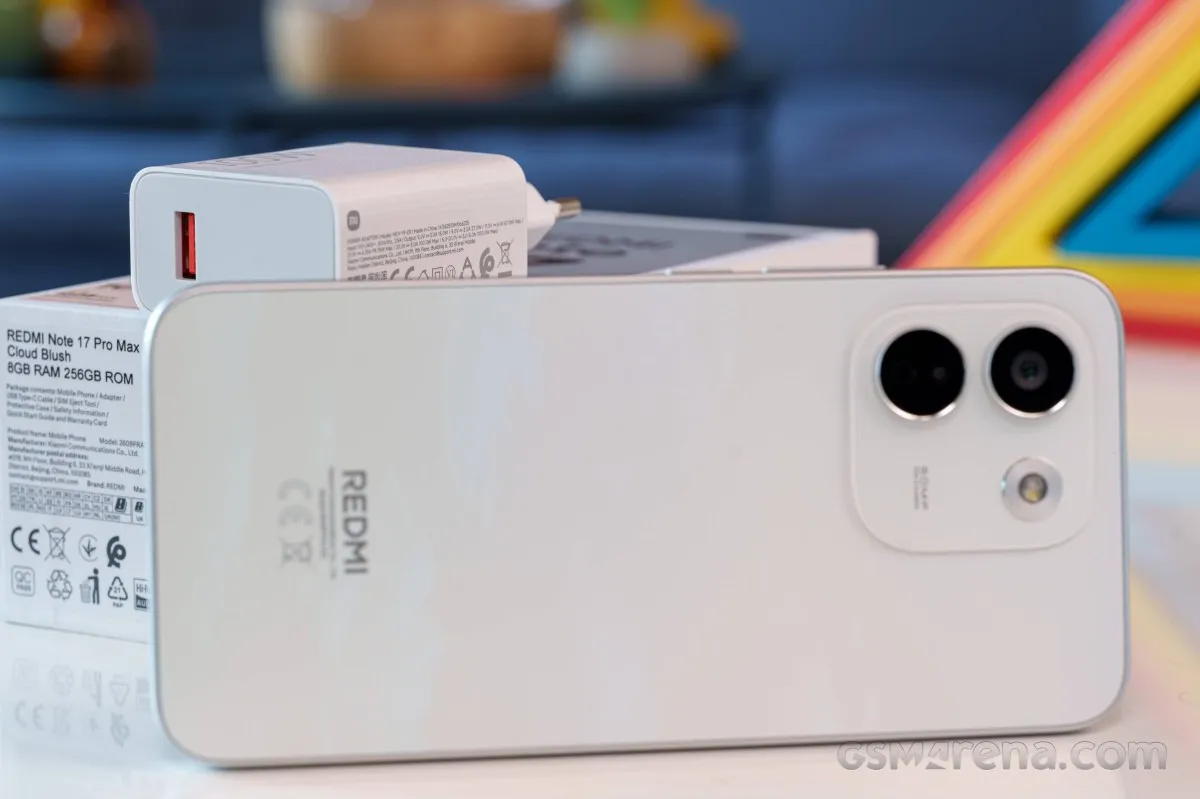
Our Redmi Note 17 Pro Max arrived inside a big fat box together with a 100W charger, a 6A-rated USB cable, and a black silicone case.
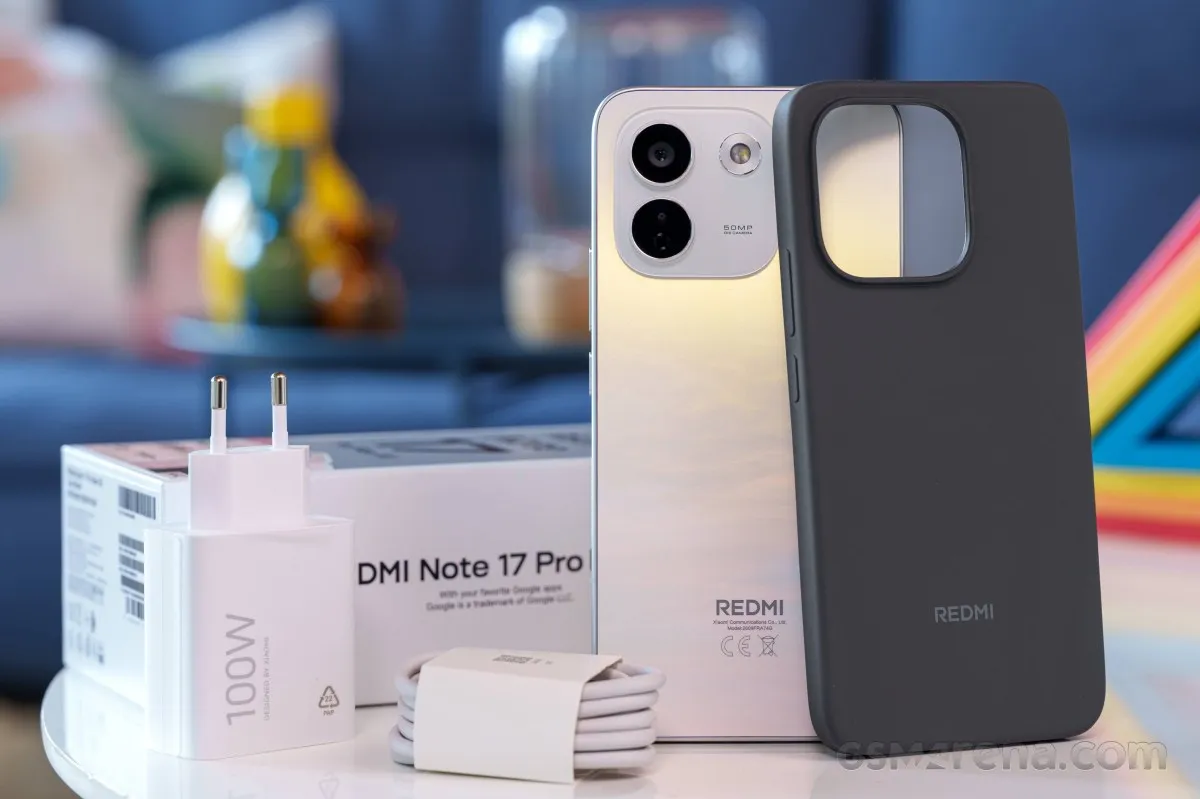
The EU models will ship without a charger as usual.
Design, build quality, handling
Design, build quality, handling
The Redmi Note 17 Pro Max relies on a traditional flat design - panels and frame. No matter the colorway you choose, you'd be getting a silky-smooth phone with an all-matte finish for smudge resistance.
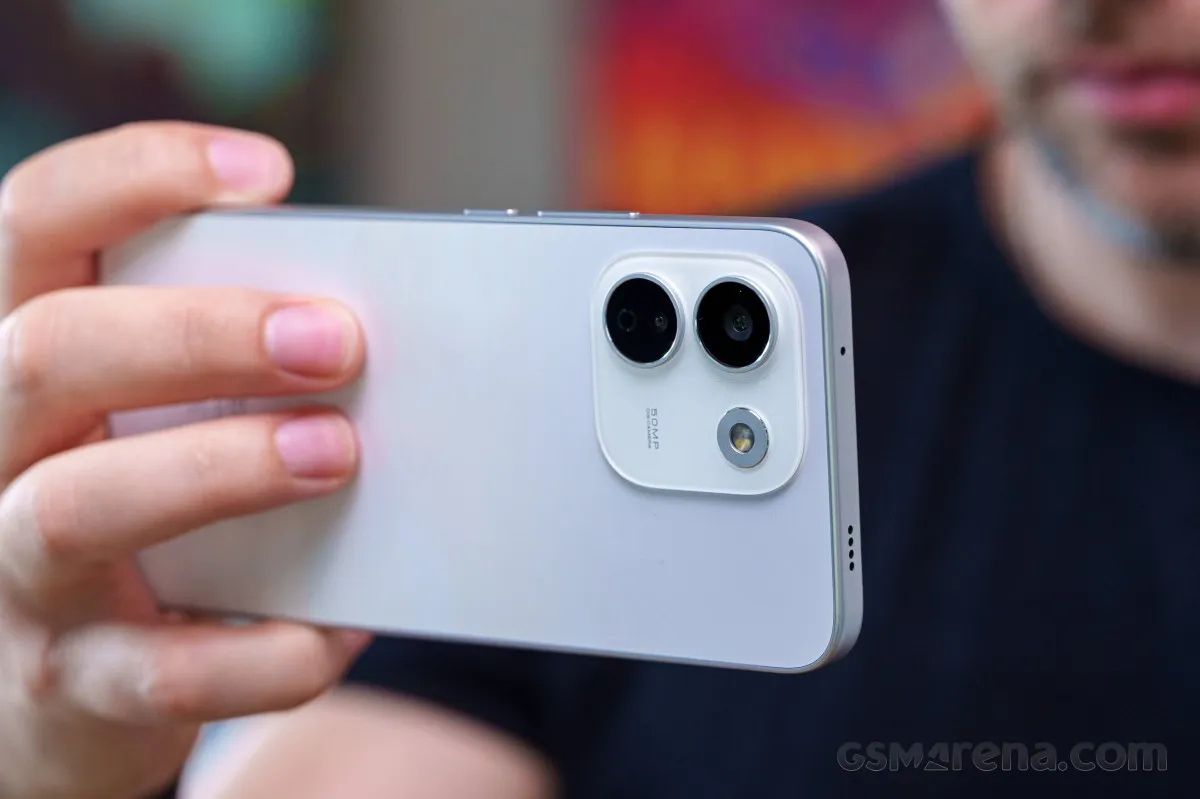
Xiaomi advertises the Note 17 Pro Max for its "Titan Quality" durability. They've indeed put a lot of effort into the durability features of the phone. It all starts with IP66, IP68, IP69 and IP69K certifications for dust, splash, water, and pressurized water jet resistance. Furthermore, Xiaomi had this Note certified by TÜV for 72-hour water endurance in 2m deep water. It's the first time we come across this certification.
The maker brags of 17 independent waterproofing components across the phone, which secure the whole thing against the elements. And Xiaomi clearly trusts them enough to even add an Underwater mode in the Camera app.
Then comes the 3-meter drop resistance certification. The maker is confident that the Redmi Note 17 Pro Max would survive 40+ 2-meter drops on marble with the screen facing down. And even a single 3-meter drop on granite.
The materials used here haven't changed much since the Note 15 model - there is a Gorilla Glass Victus 2 front, plastic frame, and what appears to be a plastic back.
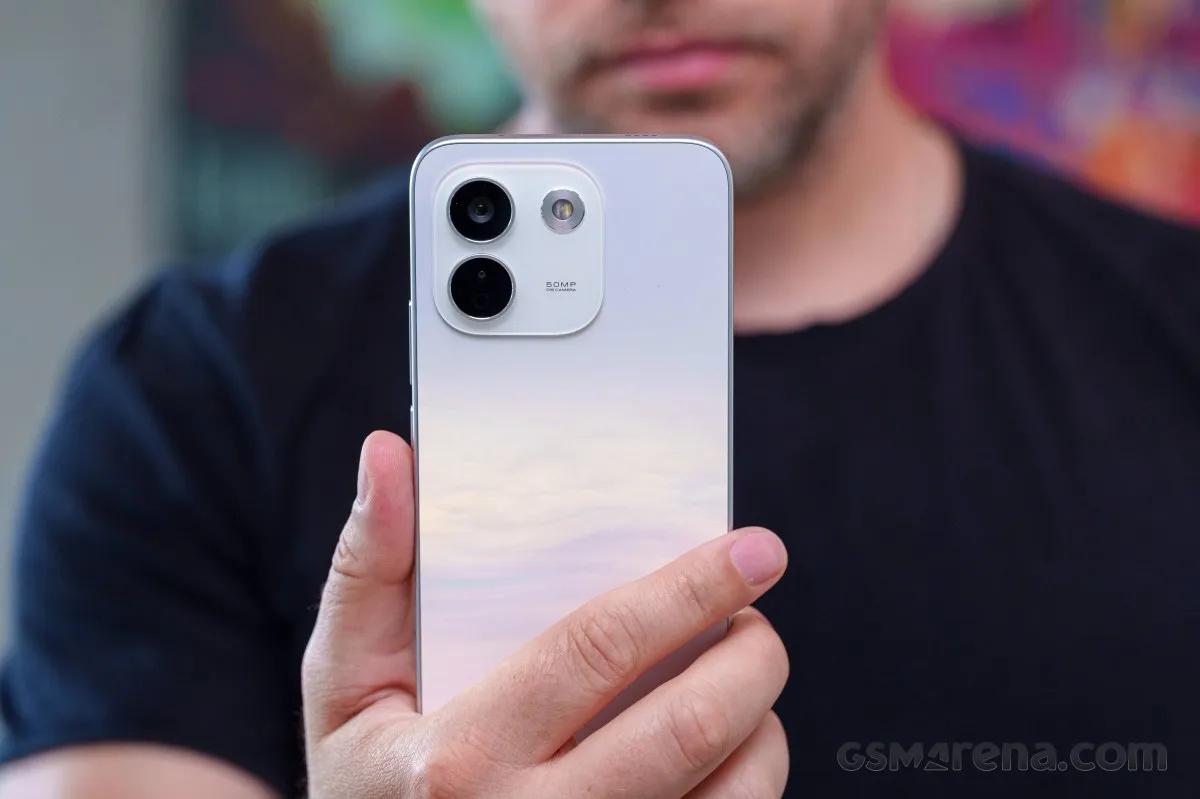
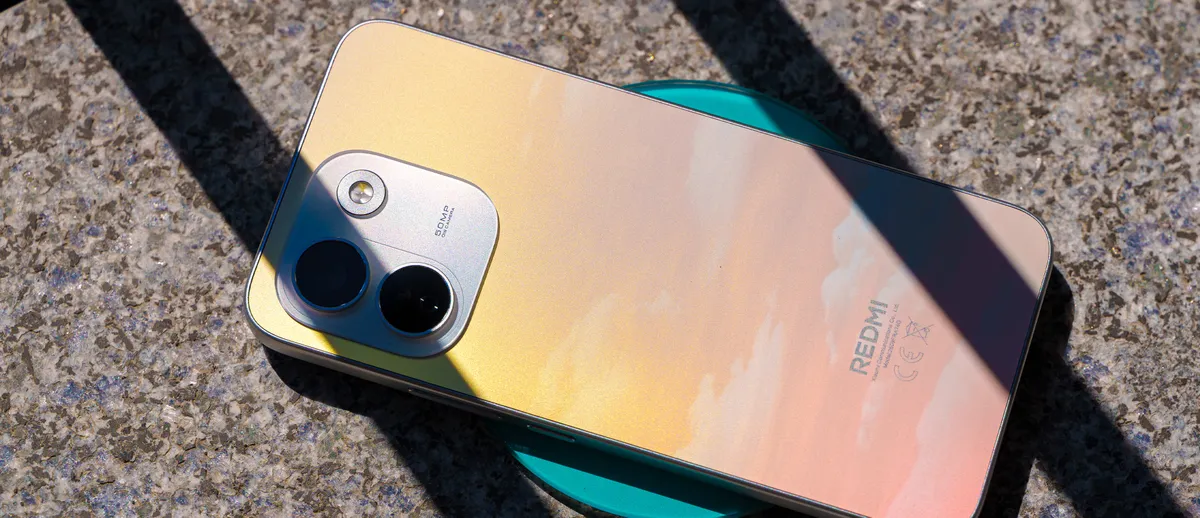
The Note 17 Pro Max is available in the signature Cloud Blush color (ours), and also Black, Green, and Purple.
Cloud Blush is a special edition featuring a color-switching back panel when exposed to sunlight (or UV light). In its regular indoor state, the back appears off-white with a subtle wavy transition to soft pink and orange, giving the impression of a cloudy skyline.
When exposed to sunlight, the photochromic surface increases the saturation of the back towards pink and then orange. Cloud patterns become more visible, and the scenery looks like a sunset. It's pretty cool.
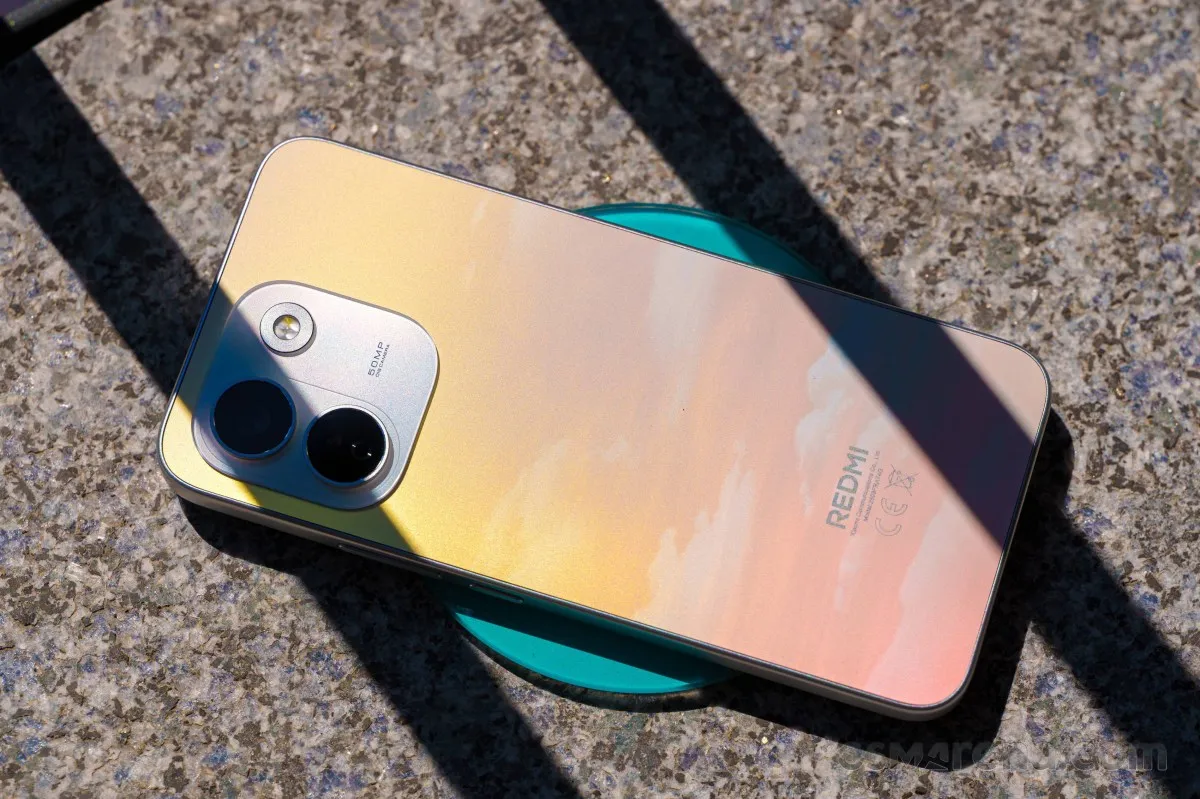
The Cloud Blush is the only photochromic model in the roster; the other colorways are all conventional and uniform-looking.
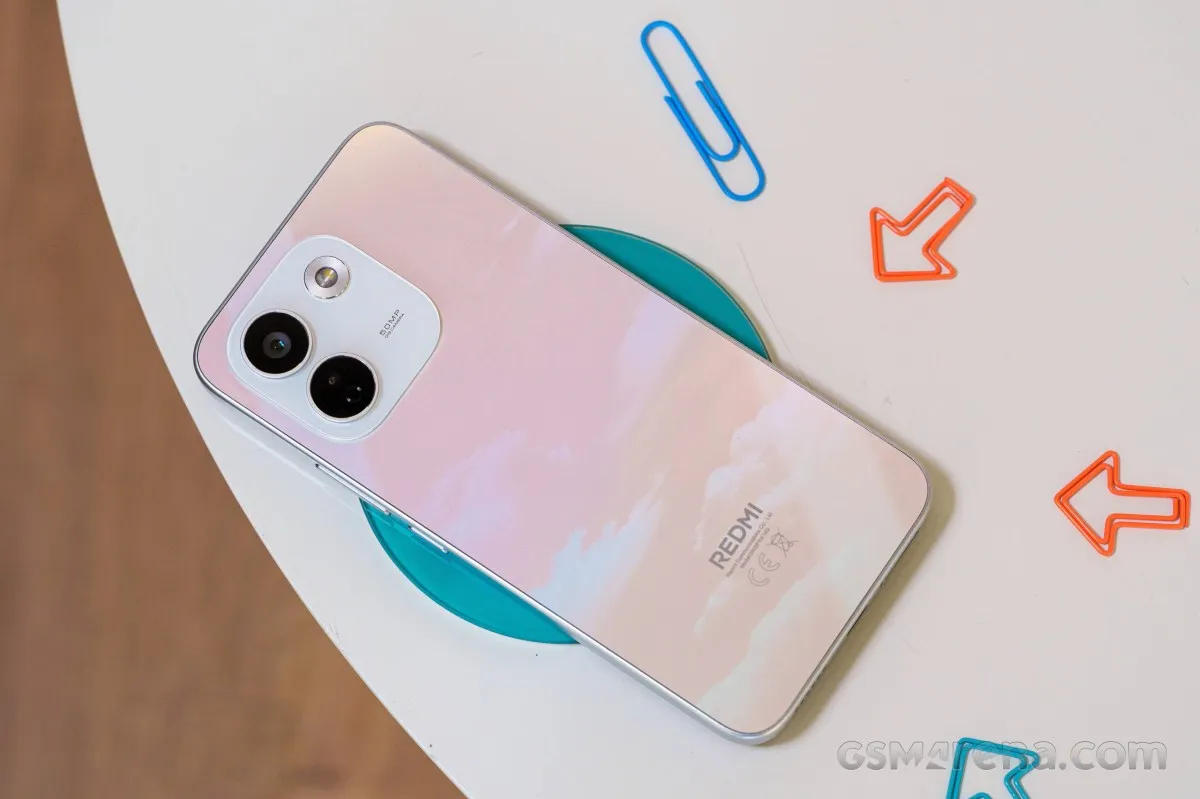
Now, let's explore the Redmi Note 17 Pro Max up close.
The 6.83-inch AMOLED screen is at the front, protected by a flat Gorilla Glass Victus 2. It has thin bezels and a small perforation to make way for the 32MP selfie imager.
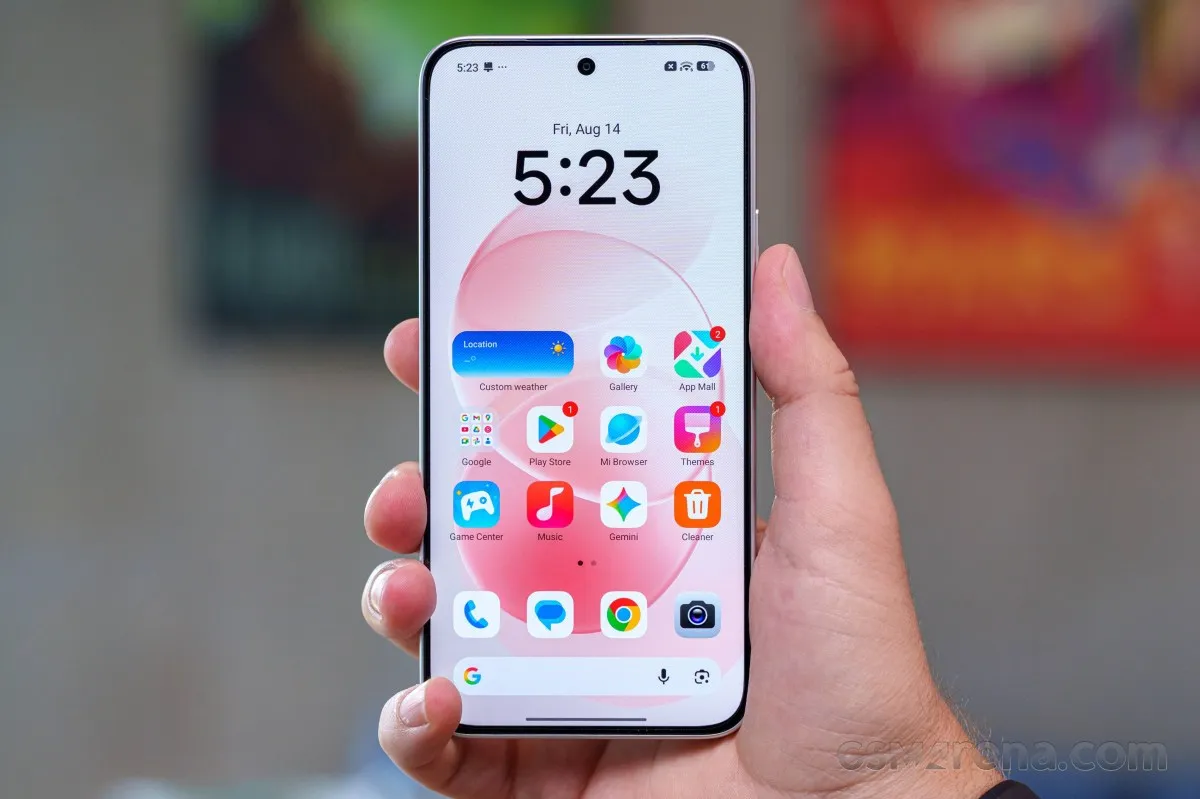
There is an incredibly thin, almost invisible earpiece above the screen, which, together with a top-facing outlet, doubles as a stereo speaker.
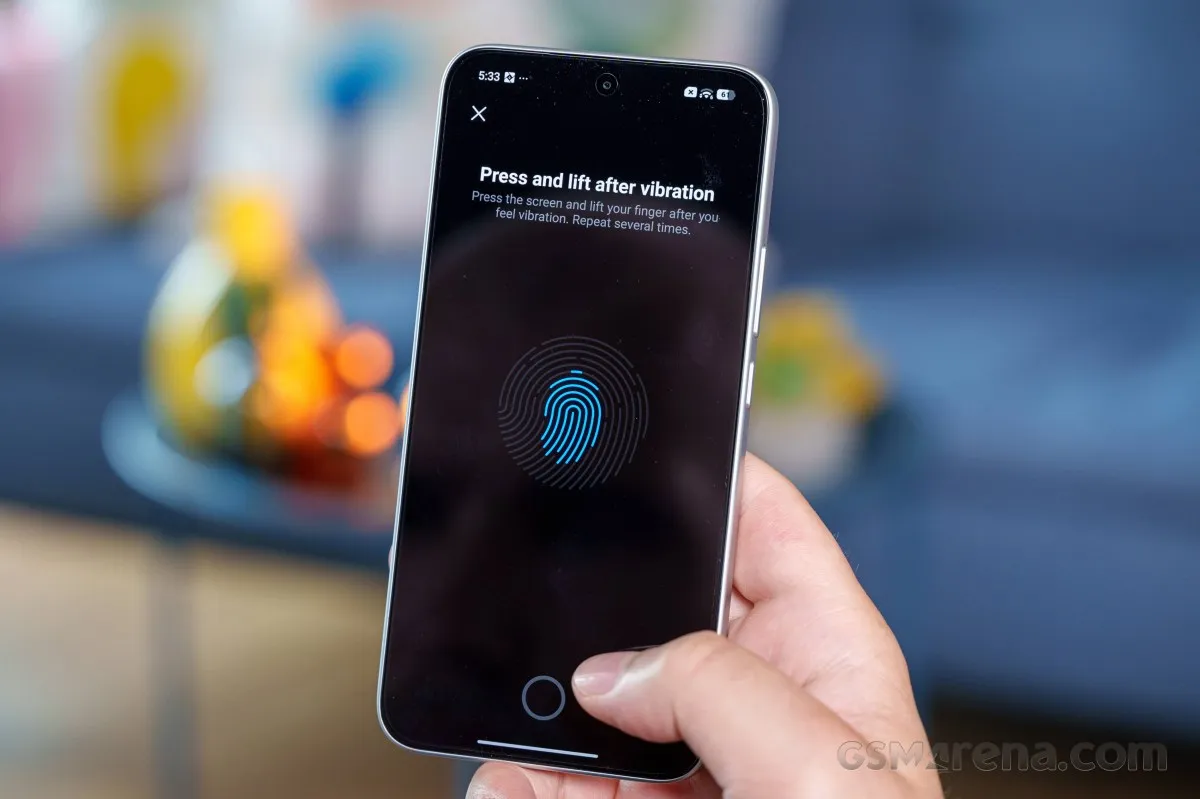
The Note 17 Pro Max also features an optical fingerprint scanner under the display. It is fast and reliable, and we had no issues throughout our review process.
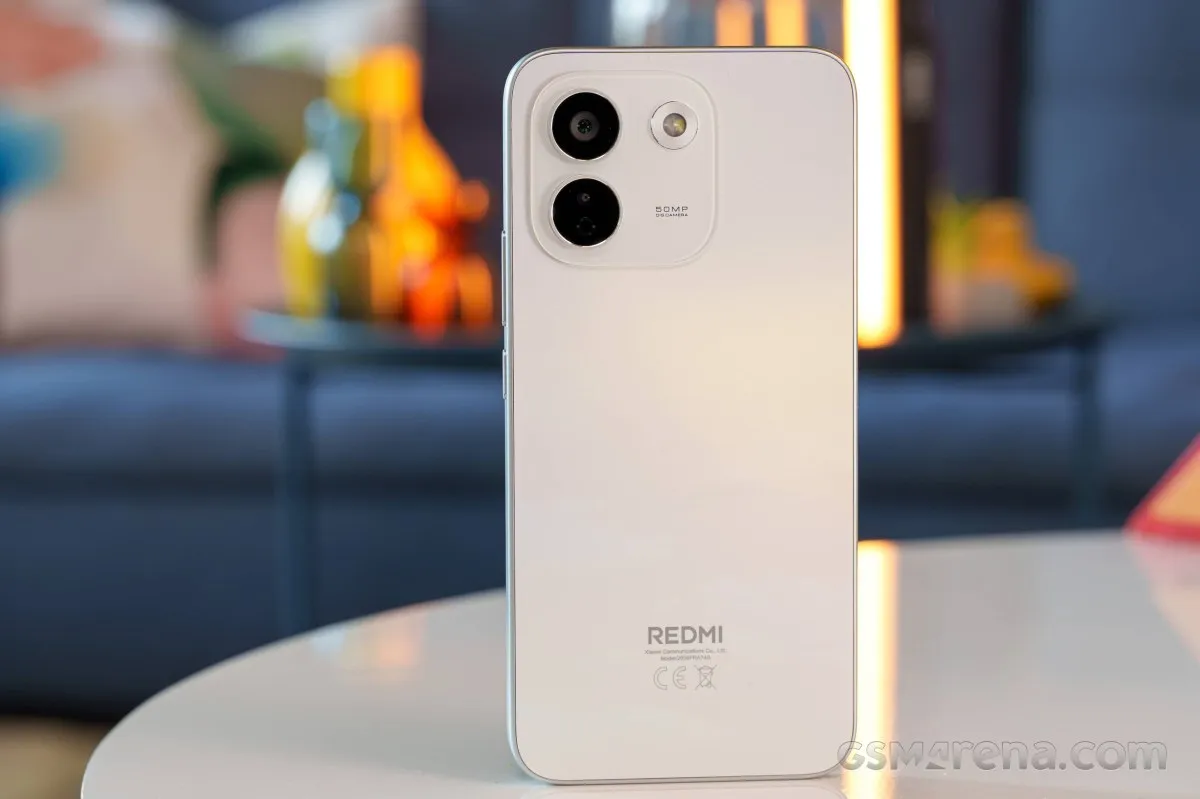
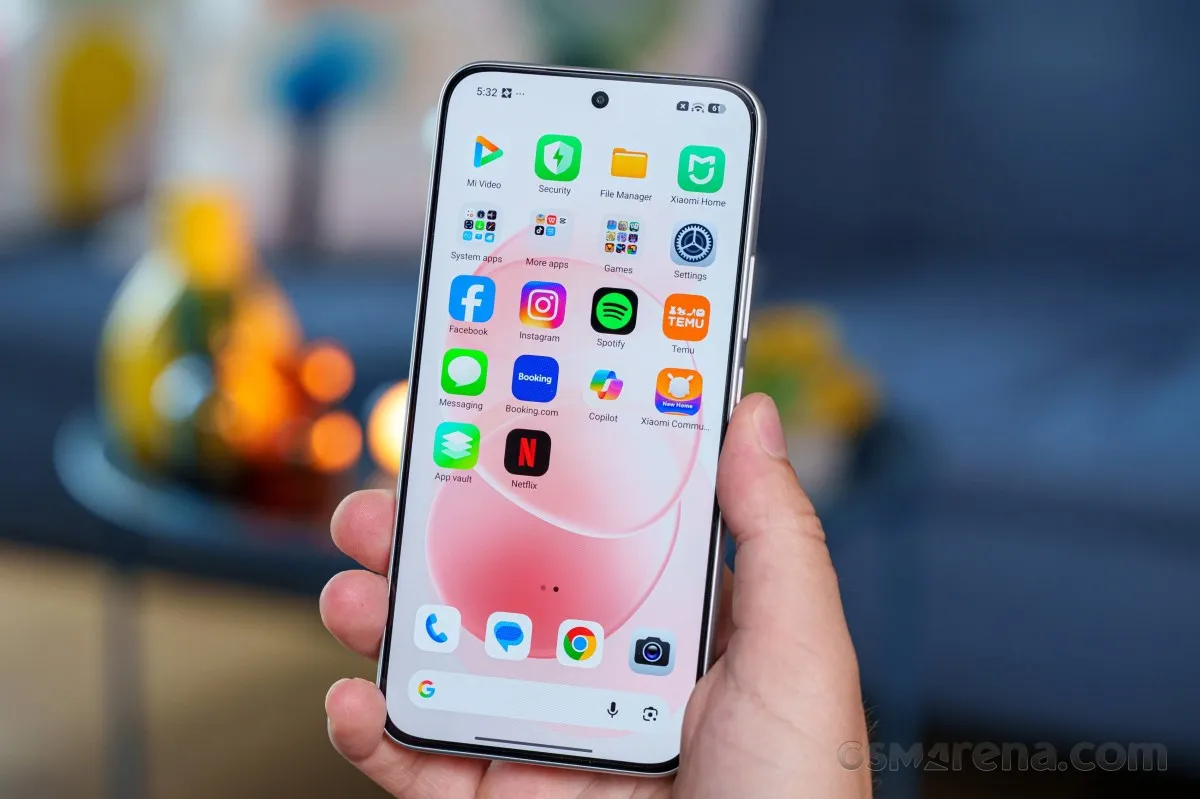
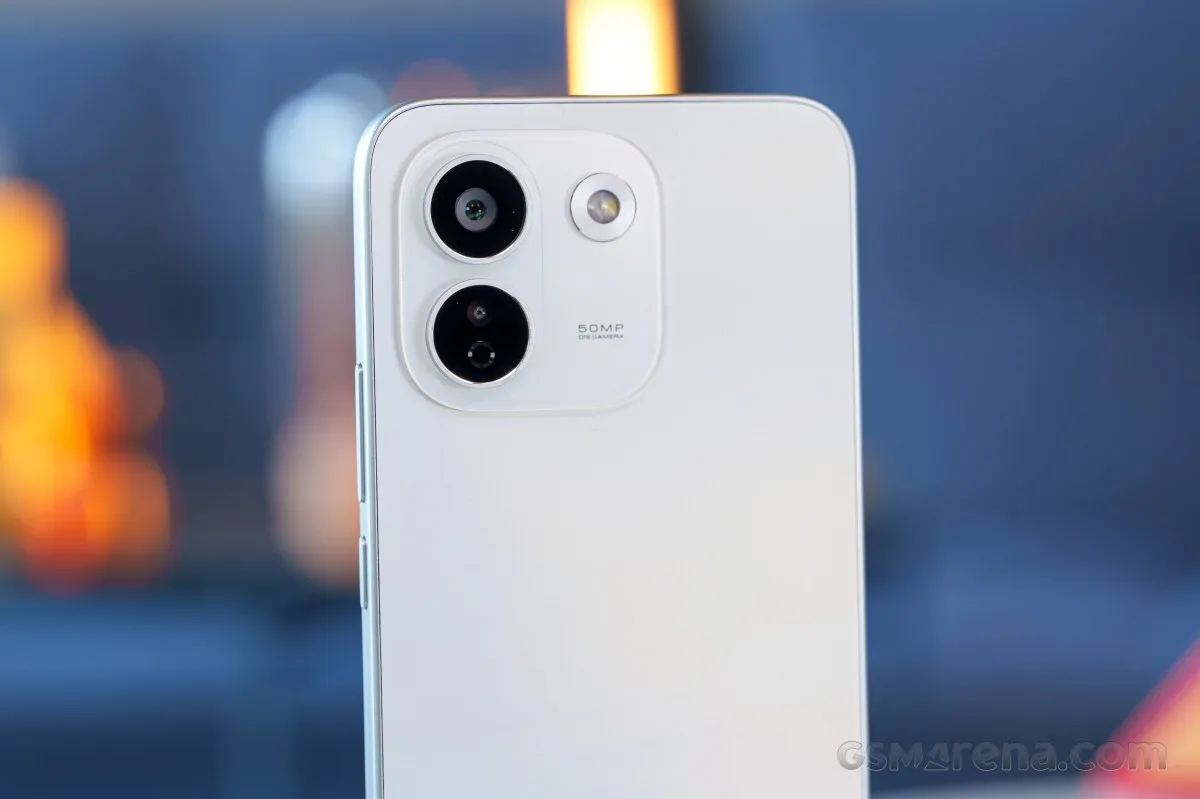
The back of the Note 17 Pro Max is also flat, and you can see the newly redesigned camera housing. It's now subtler and thinner, too.
The two-step camera island features the 50MP OIS primary and the 8MP ultrawide imagers surrounded by silver rings. The LED flash is also around, with an accent silver ring around it, too.
There is one thing you can easily miss the first few times - the IR blaster hides next to the ultrawide camera.
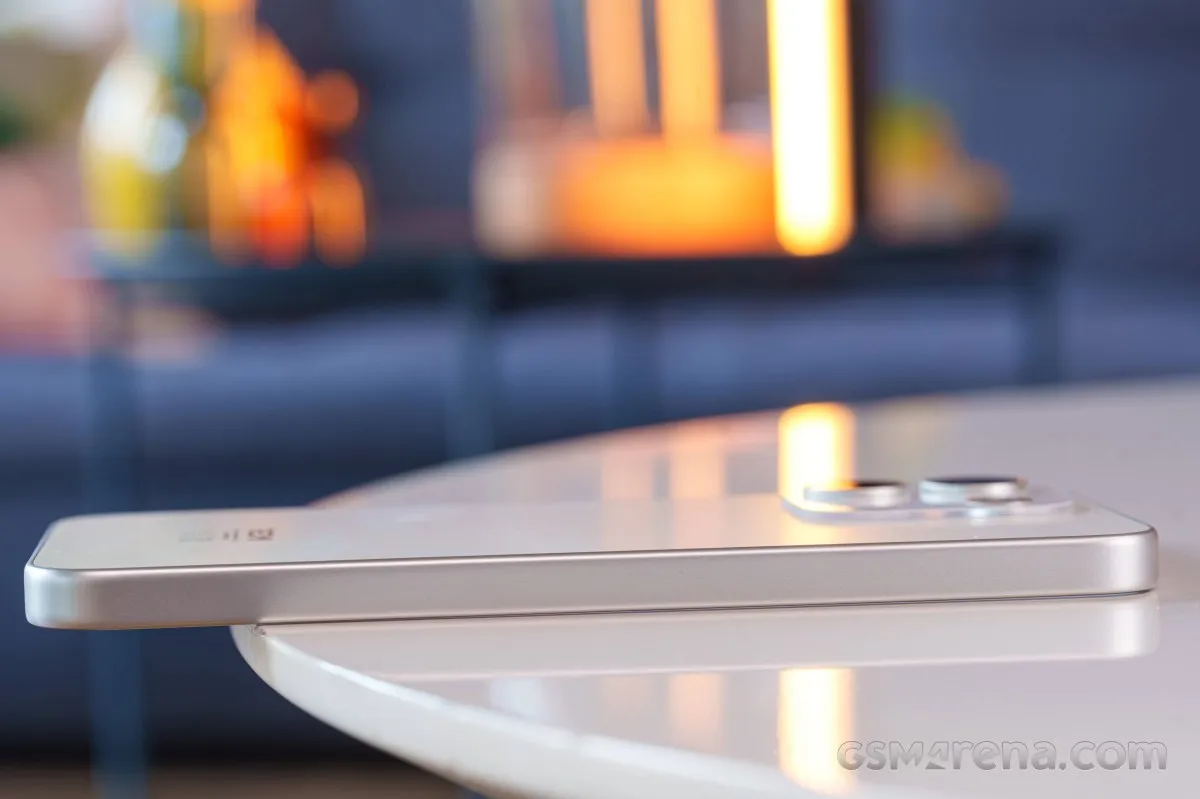
The silver frame is completely bare on the left.
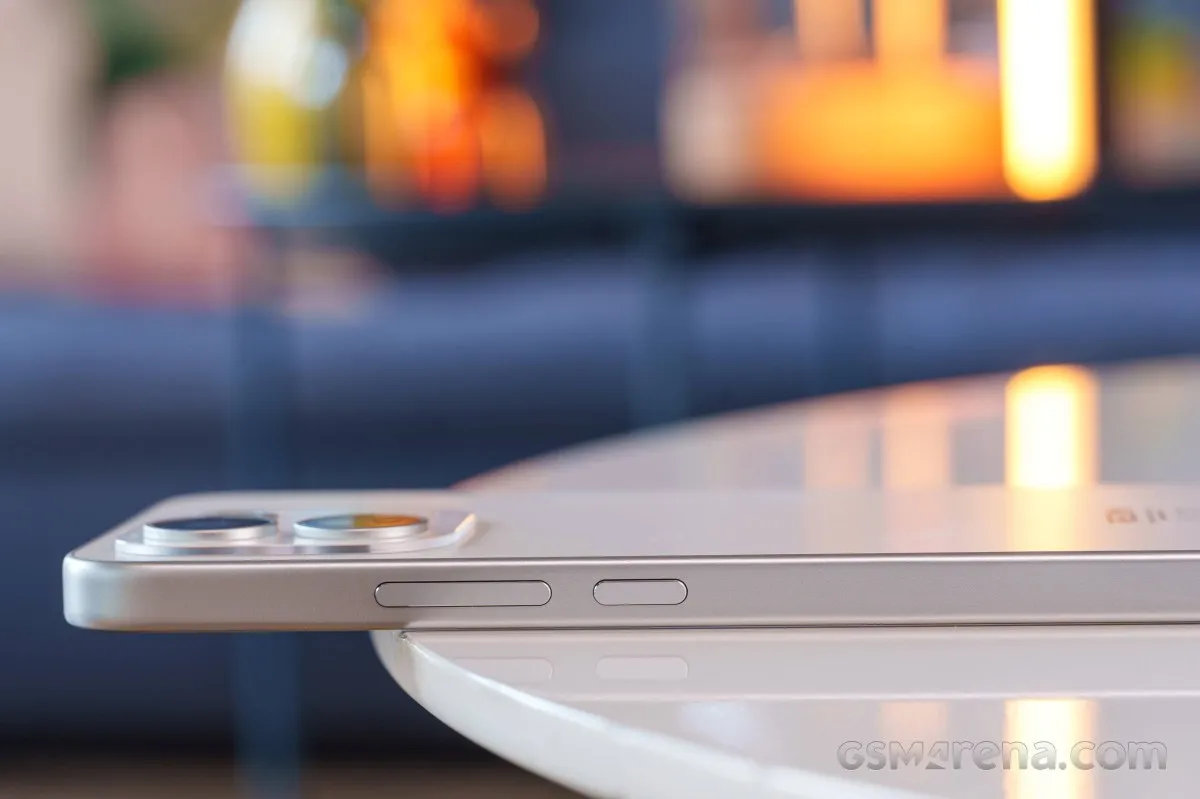
The volume and power keys are on the right, naturally.
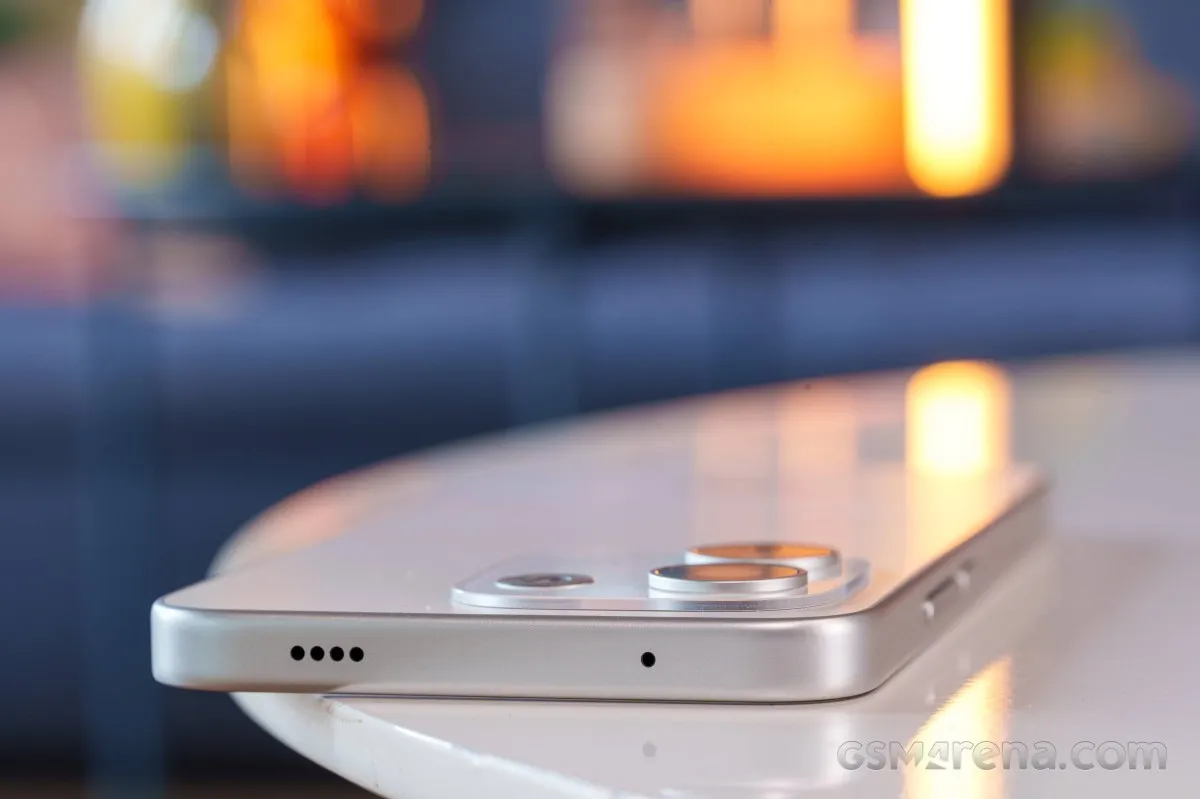
The top has one of the microphones and one of the outlets for the top speaker.
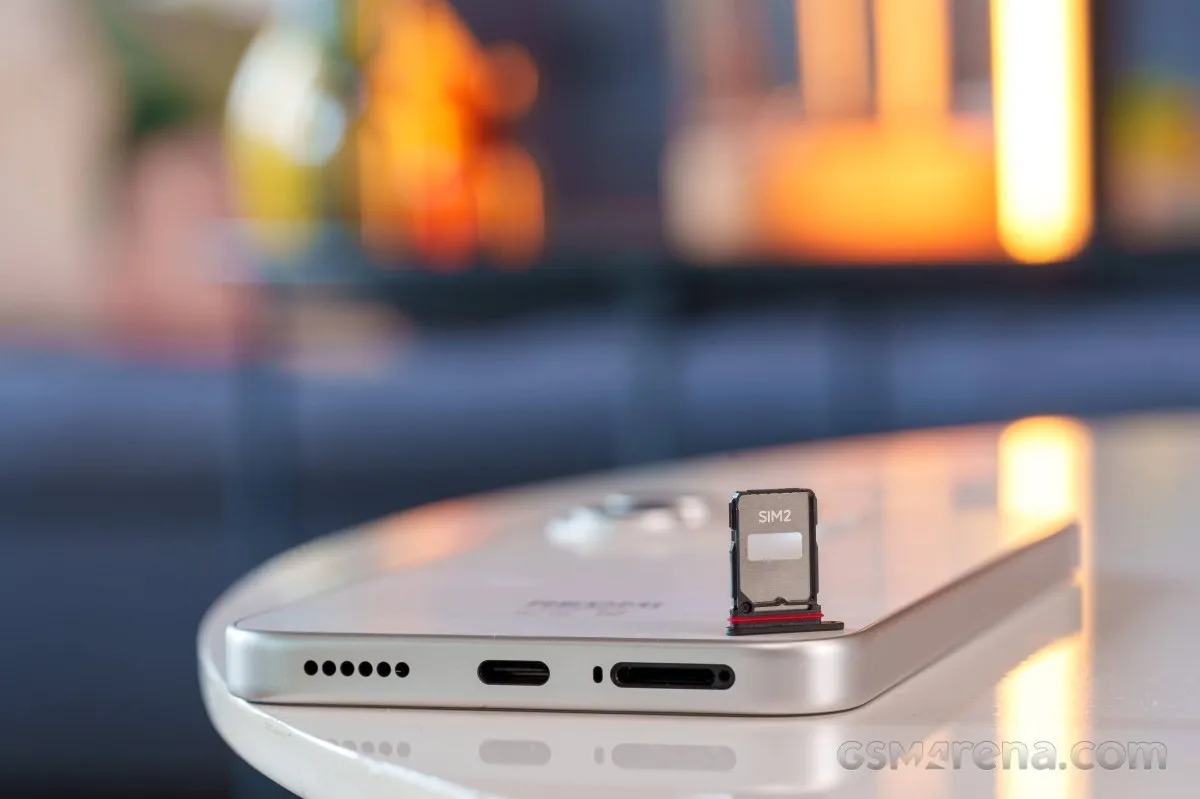
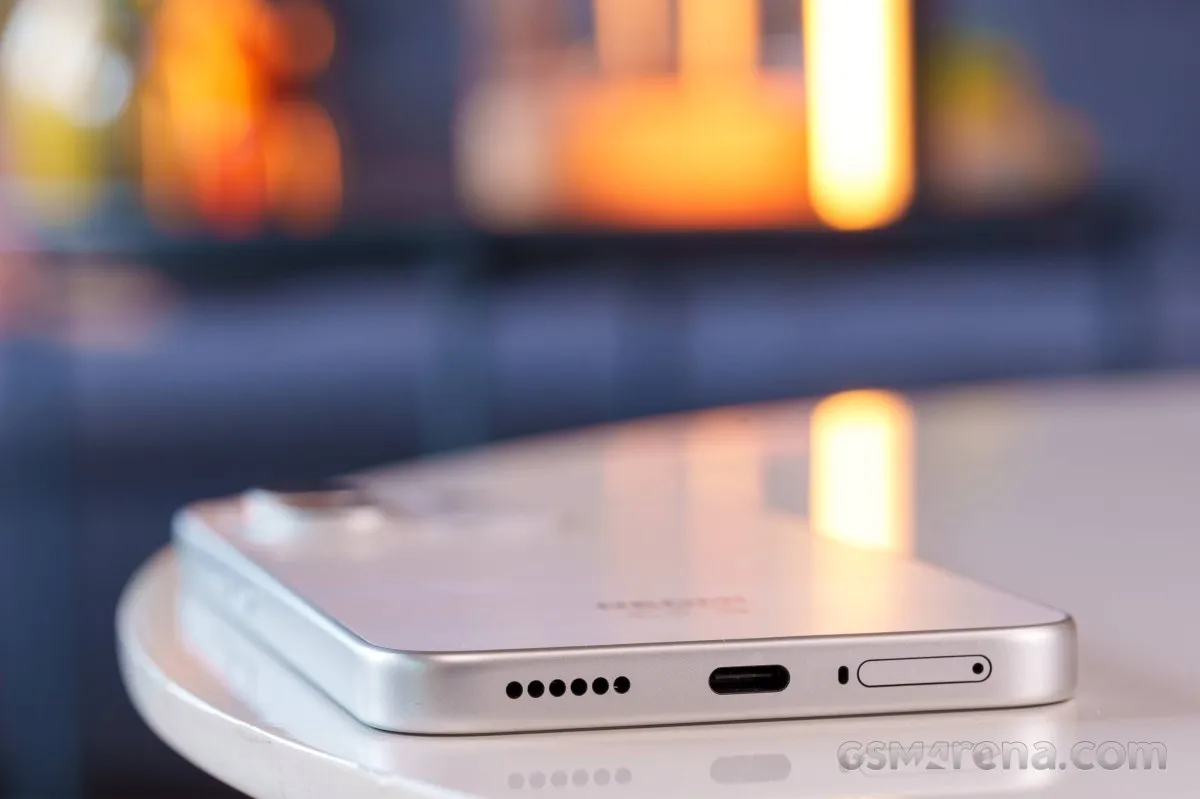
The other speaker is at the bottom, together with the USB-C port, the primary microphone, and the dual-SIM tray. The phone also supports eSIM.
Since the Redmi Note 17 Pro Max features an absurdly large 9210mAh battery, the most important question is about its size and weight. The device measures 163.4 x 78.3 x 8.6 mm and weighs 225 grams - that's about the same size as the Note 15 Pro+, but 18g heavier.
We used the Note 17 Pro Max for about a week, and our impressions are positive. It does not feel bulky, but it's definitely a large phone; the extra weight from the previous model can be felt, and it takes a day or two to get used to it. Most people will appreciate the battery life boost and will consider it a fair tradeoff.
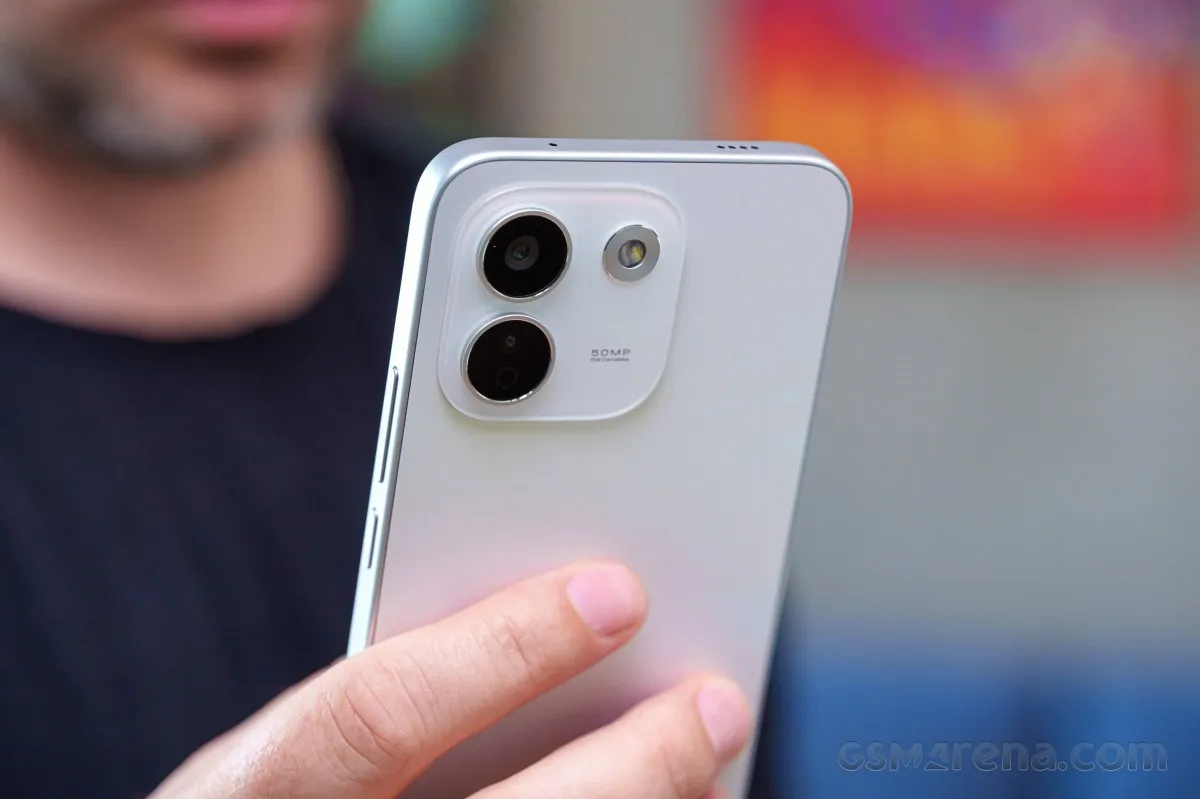
The Note 17 Pro Max's weight is also quite balanced and it sits well in your hand. It's also quite smudge-resistant, but its grip is far from optimal - the matte surface has fewer contact points and makes the phone quite slippery.
Our lab tests - display, battery life, charging speed, speakers
Display
The Redmi Note 17 Pro Max packs a 6.83-inch AMOLED panel with 1,280 x 2,772 pixels (447ppi), 12-bit color depth, and 120Hz refresh rate support. The screen supports HDR10+ and Dolby Vision streaming formats.
Other notable specs include 240Hz touch sampling rate, 3840Hz PWM dimming, and DCI-P3 color gamut support.
The display is protected with a Gorilla Glass Victus 2 sheet.
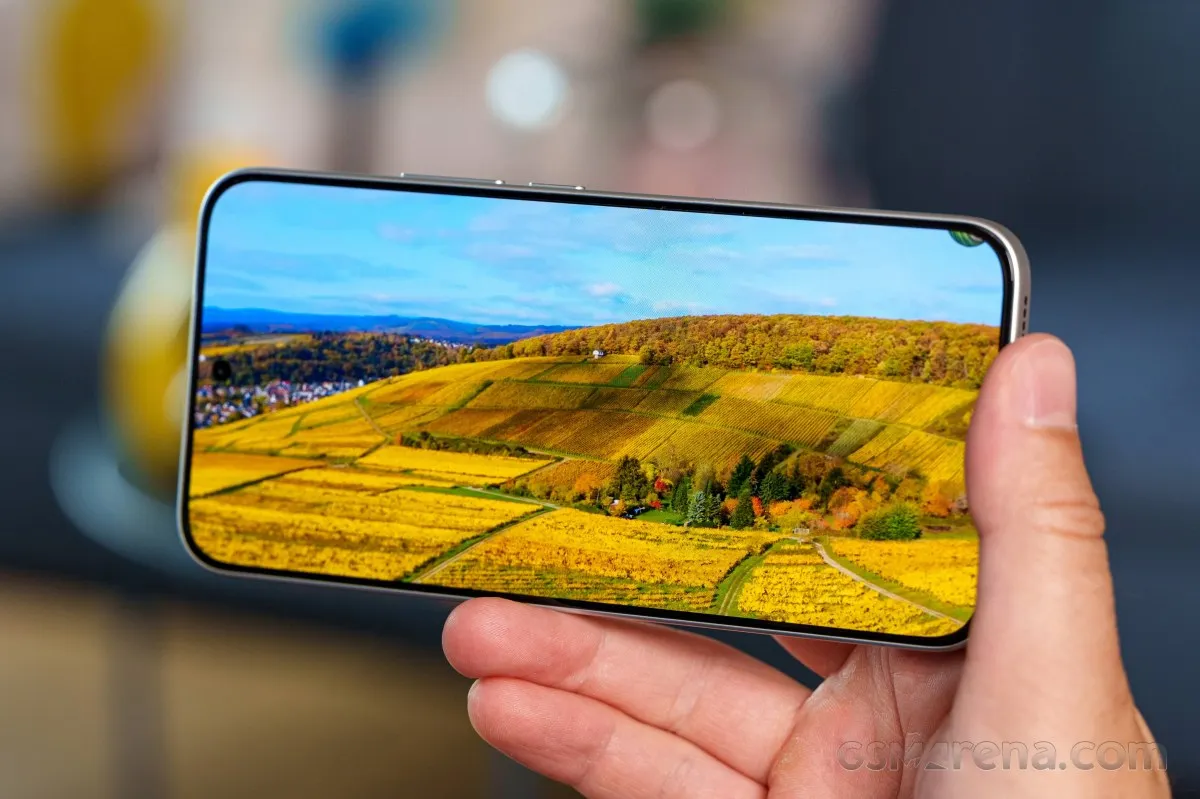
This appears to be the same panel used on the Redmi Note 15 Pro and 15 Pro+, but with a higher peak brightness of 3,500 nits, up from 3,200 nits.
The maximum automatic brightness we captured on the Note 17 Pro Max was 1,109 nits, while the peak one was the impressive 3,415 nits - about what was promised.
Finally, we measured the minimum brightness on a white screen - just 1.1 nit.
Max display brightness test
White test pattern (nits)
- Manual (75% fill)
- Auto (75% fill)
- Peak Auto (10% fill)
 Redmi Note 15 Pro 5G
 Nothing Phone (4a) Pro
 Redmi Note 15 Pro+
 Motorola Edge 70
 Galaxy A57 (gallery)
Galaxy A57
Galaxy A57 (gallery)
Galaxy A57
 Redmi Note 17 Pro Max (Global)
 Poco X8 Pro
Refresh rate
The Display settings menu offers two refresh rate options - Default and Custom. The default one switches between 60Hz, 90Hz and 120Hz where appropriate. Custom allows you to set a cap at 60Hz or force apps to display at a 120Hz refresh rate if supported.
In both Default and 120Hz the screen would dial down to 60Hz when idling. The Default mode indeed uses 120Hz for the important parts of the UI, and 60Hz and 90Hz for most apps and settings menus. Then there is the 120Hz mode that forces everything to go for the highest possible refresh rate.
The only time we observed 30Hz was on the always-on screen, which is not deserving of its name as it disappears after 10 seconds.
HDR and streaming
The screen on the Redmi Note 17 Pro Max supports HDR10, HDR10+ and Dolby Vision streaming formats. And it can serve such content across all popular apps, Netflix and YouTube included.
Battery life
We won't blame you if you jumped to this section first, as this is one of the most interesting aspects of the phone. This year, Xiaomi focused heavily on battery autonomy, and the Redmi Note 17 Pro Max definitely deserves the Max moniker with its massive 10,000mAh Si/C battery.
We are reviewing the EU version here, which has a reduced 9,210mAh battery. Other regions like Australia get this battery capacity as well, so the limitation is not strictly EU-related.
The battery inside the 17 Pro Max is accompanied by Xiaomi's Surge G2 management chipset, which allows for accurate display of the remaining power.
Finally, Xiaomi promises up to 6 years of battery health, as the cell is said to keep 80% of its battery after 1,600 cycles.
In our testing, the Redmi Note 17 Pro Max scored an Active Use Score of 22:31h, occupying the 10th spot in our all-time chart. The phone's battery was good for over 64h of talk time, and it lasted a few minutes north of 24 hours on web browsing. The Max also clocked 38 hours of video streaming, and 9:32h of game time.
The game time was not as long as we expected with such a big battery, but we guess the Snapdragon 6 Gen 5 chipset is not very efficient under these loads. The Poco X8 Pro Max, for example, with its 8500mAh battery but using the Dimensity 9500s, lasted almost 16 and a half hours of gaming.
Charging speed
The Redmi Note 17 Pro Max supports Xiaomi's 100W HyperCharge fast charging and 27W of reverse wired charging. There is an option for Boost Charge when the screen is turned off, and we left that active.
We carried our test with Xiaomi's own 100W power adapter and the bundled 6A-rated USB-A-C cable.
The maker promises 56% of charge in 30 mins and a full charge in 64mins. And our charging test pretty much confirms this speed.
The Redmi Note 17 Pro Max huge battery went from 1% to 33% in 15mins and up to 57% in 30mins on the 100W charger. Finally, the Max reached 100% on the 61min mark. That's quite impressive given the extra-large battery.
Charging speed
- in 15 min
- in 30 min
- Time to full charge (from 0%)
Redmi Note 15 Pro+
Nothing Phone (4a) Pro
 Poco X8 Pro Max
Galaxy A57
Poco X8 Pro Max
Galaxy A57
 Motorola Edge 70 Max
 Realme 16 Pro+
Redmi Note 17 Pro Max (Global)
Redmi Note 15 Pro 5G
Realme 16 Pro+
Redmi Note 17 Pro Max (Global)
Redmi Note 15 Pro 5G
The Redmi Note 17 Pro Max offers different battery protection features. The first one is Smart Charging, which intelligently controls the whole charging process with considerations for ambient temperature, app usage, etc.
Then you can turn on Battery Protection with an 80% charge cap or Intelligent Charging, which learns from your usage habits and recharges accordingly.
Using these features, Xiaomi promises that this battery won't drop below the 80% threshold in six years or 1,600 cycles.
Speakers
The Redmi Note 17 Pro Max has two speakers - the bottom one is larger and louder, while the top one is actually an amplified earpiece with two outlets for sound balance.
Xiaomi offers a 200% and 400% loudness boost over the max volume level. We tested the 100% loudness and 400% loudness for thoroughness.
When using the standard 100% volume, we recorded -26.8 LUFS - a Good score. The audio quality was very good, featuring sufficient bass, clear vocals, and balanced highs.
At the 400% volume level, you should not expect a 4x boost in loudness. Here, the 17 Pro Max achieved a Very Good mark with -24.3 LUFS, but the audio quality took a sharp turn for the worse by losing the lows, ruining the mids, and pushing everything into the highs.
The sample recorded below is from the 100% level output.
Use the Playback controls to listen to the phone sample recordings (best use headphones). We measure the average loudness of the speakers in LUFS. A lower absolute value means a louder sound. A look at the frequency response chart will tell you how far off the ideal "0db" flat line is the reproduction of the bass, treble, and mid frequencies. You can add more phones to compare how they differ. The scores and ratings are not comparable with our older loudspeaker test. Learn more about how we test here.
Software, performance
Android 16 and HyperOS 3
The Redmi Note 17 Pro Max ships with the company's latest HyperOS 3 OS, running on top of Android 16 base.
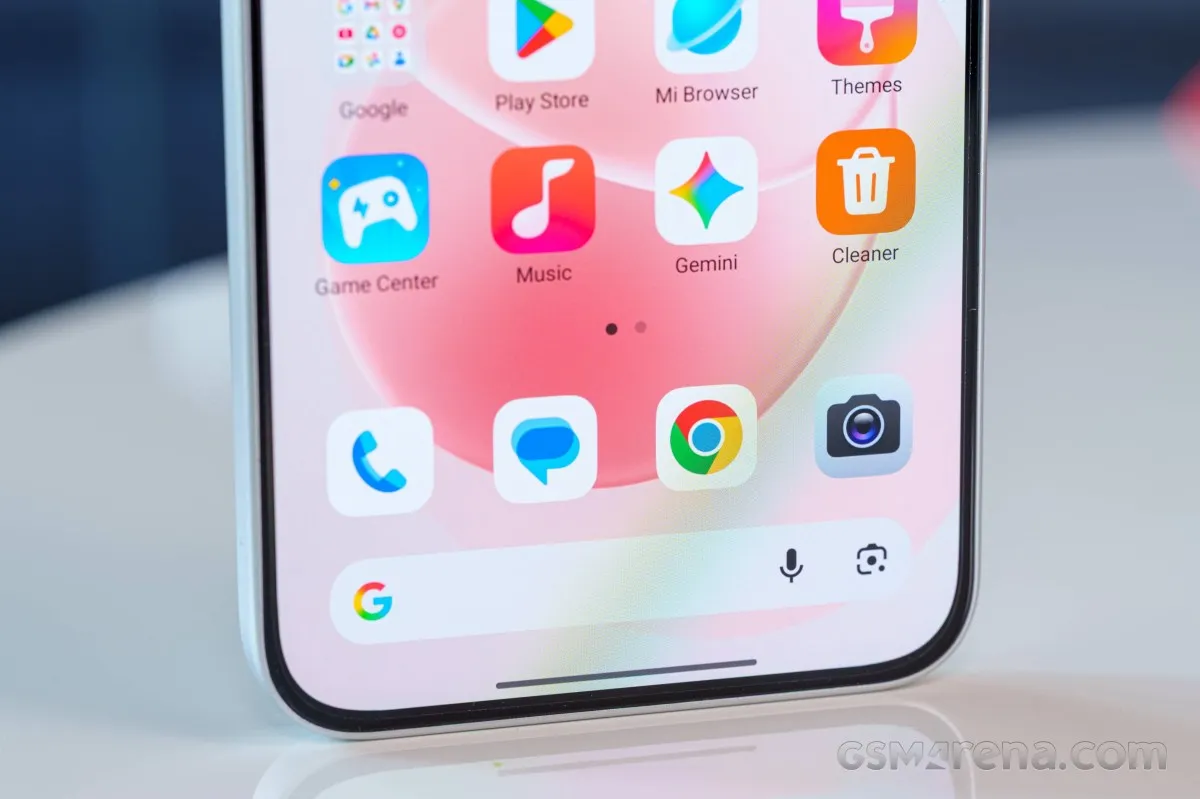
Anyone coming from the past couple of iterations of HyperOS will feel instantly familiar here, as the visual tweaks are minimal at best. Xiaomi does claim to have refined the system animations further, aiming for an even snappier and smoother overall experience, though we can't say responsiveness or fluidity have been an issue on recent versions to begin with.
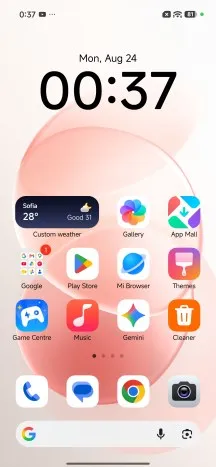


The most prominent new addition to the interface is Hyper Island - Xiaomi's take on Apple's Dynamic Island concept in iOS. It serves up contextual information and quick shortcuts for supported background activities, showing things like ongoing timers, incoming calls, current calendar events or media playback controls for apps such as Spotify.
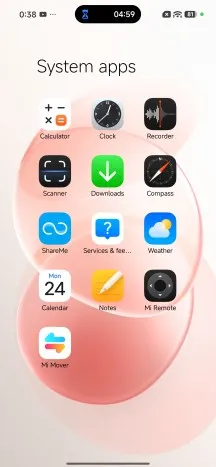
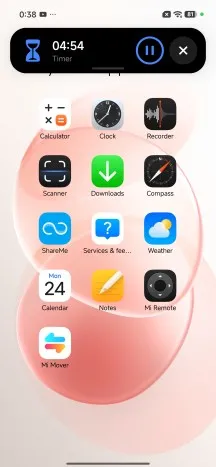
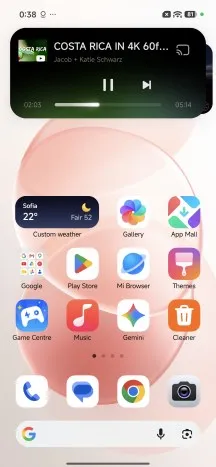
System icons are also slightly redesigned - they appear flatter and simpler by default.
The main focus of HyperOS 3.0 seems to be connectivity and AI. In China, Xiaomi has its homegrown XiaoAI assistant, but in international units like ours, Google Gemini is at the helm. The rest of the AI features are the same as before - wallpaper generation, live subtitles, transcription, translator, writing, AI search, etc.


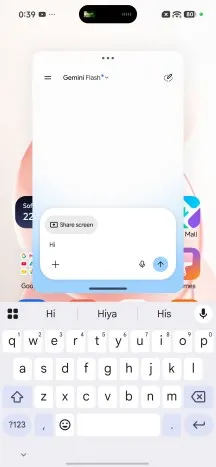
Most of the AI-powered features are grouped under the dedicated Xiaomi HyperAI menu. This is also where you'll find the options for configuring Gemini - Google's AI assistant - including how it can be invoked throughout the system.


On the connectivity front, Xiaomi is continuing to expand its Interconnectivity ecosystem. Previously limited mostly to Xiaomi devices signed into the same Xiaomi Account, the feature allowed sharing of things like Wi-Fi passwords, files, notifications, calls and screen mirroring. With HyperOS 3.0, Xiaomi is opening things up further, adding support for select cross-device features with non-Xiaomi Android devices, as well as Apple hardware like iPhones and iPads. Pairing and integration with both Windows PCs and Mac computers is supported, too.
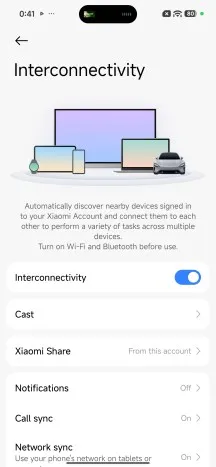
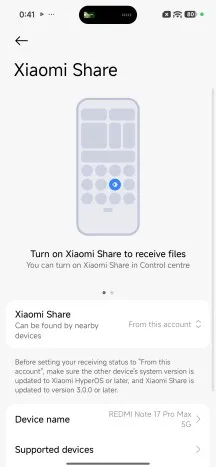
Interestingly, Xiaomi says it's possible to read notifications and answer calls directly from your iPad, Mac or iPhone, but we have not tried that.
Performance
The Redmi Note 17 Pro Max employs the Snapdragon 6 Gen 5, a 4nm chip from Qualcomm. It was announced back in May, but this is the first time we have encountered it for testing.
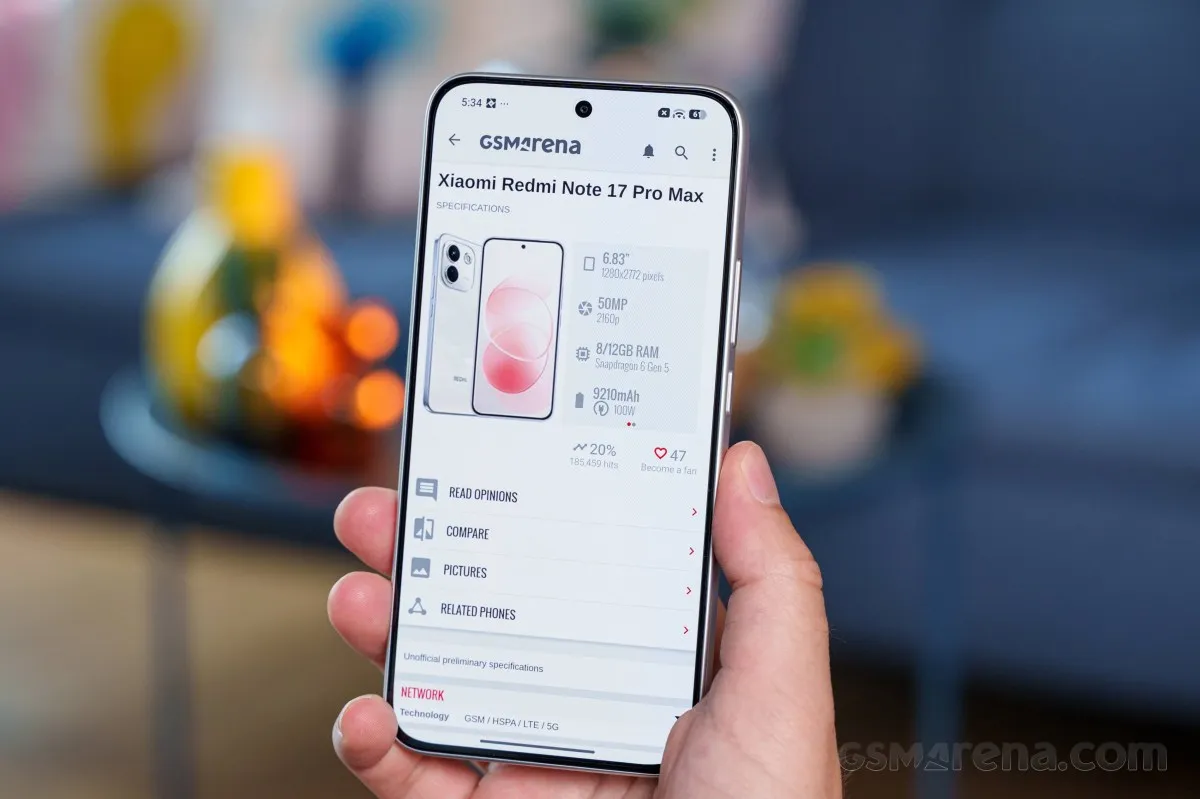
The SoC packs an octa-core CPU with 4x 2.6 GHz Cortex-A78 and 4x 2.0 GHz Cortex-A55 cores. There is a new Adreno 812 GPU as well.
This chipset choice is perplexing because, on paper, it's a lower-grade chipset than the Snapdragon 7s Gen 4 inside the Redmi Note 15 Pro+. Still, our benchmark results showed a different picture as you will see below.
The Redmi Note 17 Pro Max comes with either 8GB or 12GB of LPDDR5X RAM. You can choose between 256GB and 512GB UFS 4.0 storage, though there is also a base version with 128GB of UFS 2.2 storage.
One interesting bit is that according to Qualcomm, the Snapdragon 6 Gen 5 does not support UFS 4.0 storage, and yet Xiaomi claims the Redmi Note 17 Pro Max is equipped with such storage. We ran some tests, and we discovered that the storage speeds here only match UFS 3.x. So even if Xiaomi has really integrated UFS 4.0 flash storage inside the phone, it doesn't really bring any benefit due to the chipset limitation.
GeekBench 6
- Single-core
- Multi-core
Poco X8 Pro
Galaxy A57
Motorola Edge 70
 Nothing Phone (4a)
Redmi Note 15 Pro+
Redmi Note 15 Pro 5G
Redmi Note 17 Pro Max (Global)
Nothing Phone (4a)
Redmi Note 15 Pro+
Redmi Note 15 Pro 5G
Redmi Note 17 Pro Max (Global)
AnTuTu 10
Poco X8 Pro
Motorola Edge 70
Galaxy A57
Nothing Phone (4a)
Redmi Note 17 Pro Max (Global)
Redmi Note 15 Pro+
Redmi Note 15 Pro 5G
3DMark
- Wild Life Extreme (Highest)
- Wild Life Extreme (Lowest)
Poco X8 Pro
Motorola Edge 70
Galaxy A57
Redmi Note 17 Pro Max (Global)
Nothing Phone (4a)
Redmi Note 15 Pro+
Redmi Note 15 Pro 5G
The Redmi Note 17 Pro Max scored as well as other similarly priced mid-rangers and a tiny bit better than the Redmi Note 15 Pro+. So, there is a minor improvement in theoretical speed.
We just expected a bigger boost or maybe even Poco-level performance, but that's not the case. The Redmi Note 17 series is conservative when it comes to performance, likely due to the ongoing chip crisis and shifting priorities.
It's not a slow phone by a long shot-you just shouldn't expect it to handle everything perfectly smoothly.
Finally, we ran our usual stress tests, and the Note 17 Pro Max aced them. It scored 85% on the CPU throttling test and 99% on the 3DMark stress test.
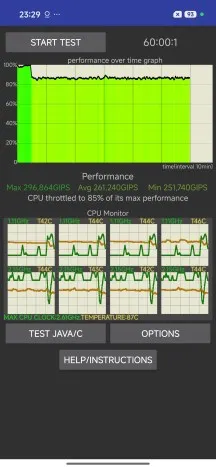
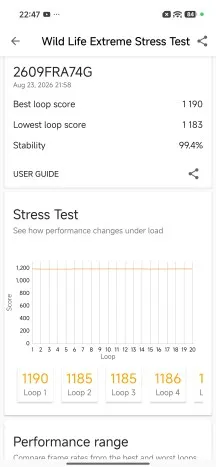
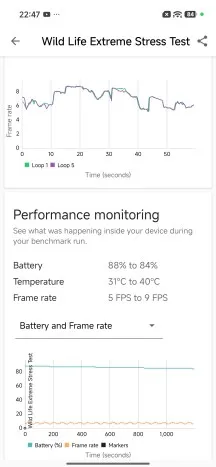
Those are solid numbers, and the phone never gets hot. However, it's not that Xiaomi came up with an outstanding cooling solution - the phone's chip is just quite modest.
Camera - photo and video quality
Standard-issue dual setup on the back, familiar selfies
The Redmi Note 17 Pro Max features a rather plain dual rear camera configuration that doesn't exactly scream 'Pro Max' and is relatively simpler than those of the previous gen Pro or Pro+. The selfies, meanwhile, are about as standard as you can expect on a midrange Xiaomi phone too.
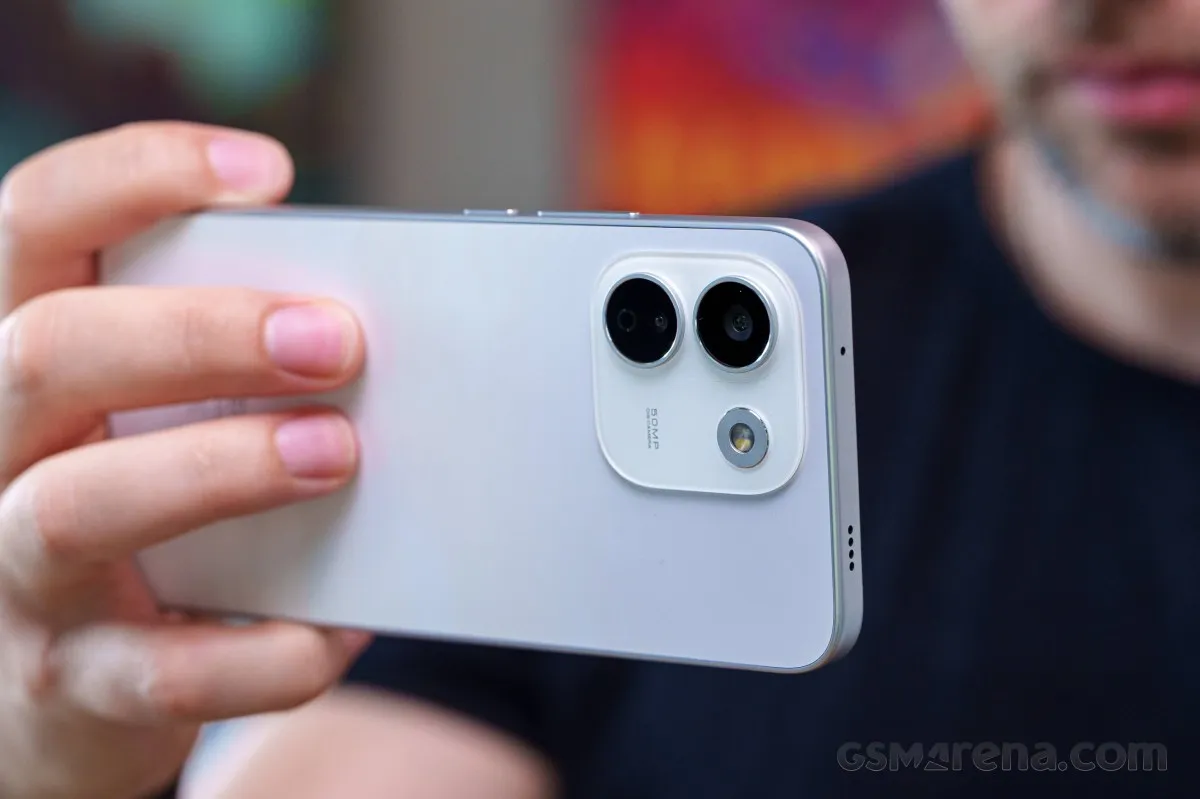
The main camera reports an OmniVision OV51A and it's listed as having 51MP resolution (yes, fifty-one), though the actual dimensions are still the same 8,192x6,144px that we've been getting from other '50MP' sensors. Either way, it's a new and/or obscure imager that's hard to find data on, but we do get the key specs - 1/1.95" optical format and 0.8µm pixel size. It's paired with a narrow-ish 26mm lens with OIS and an f/1.5 aperture. The Redmi Note 15 Pro and Pro+ had 200MP 1/1.4" sensors and this latest generation is indeed looking like a downgrade.
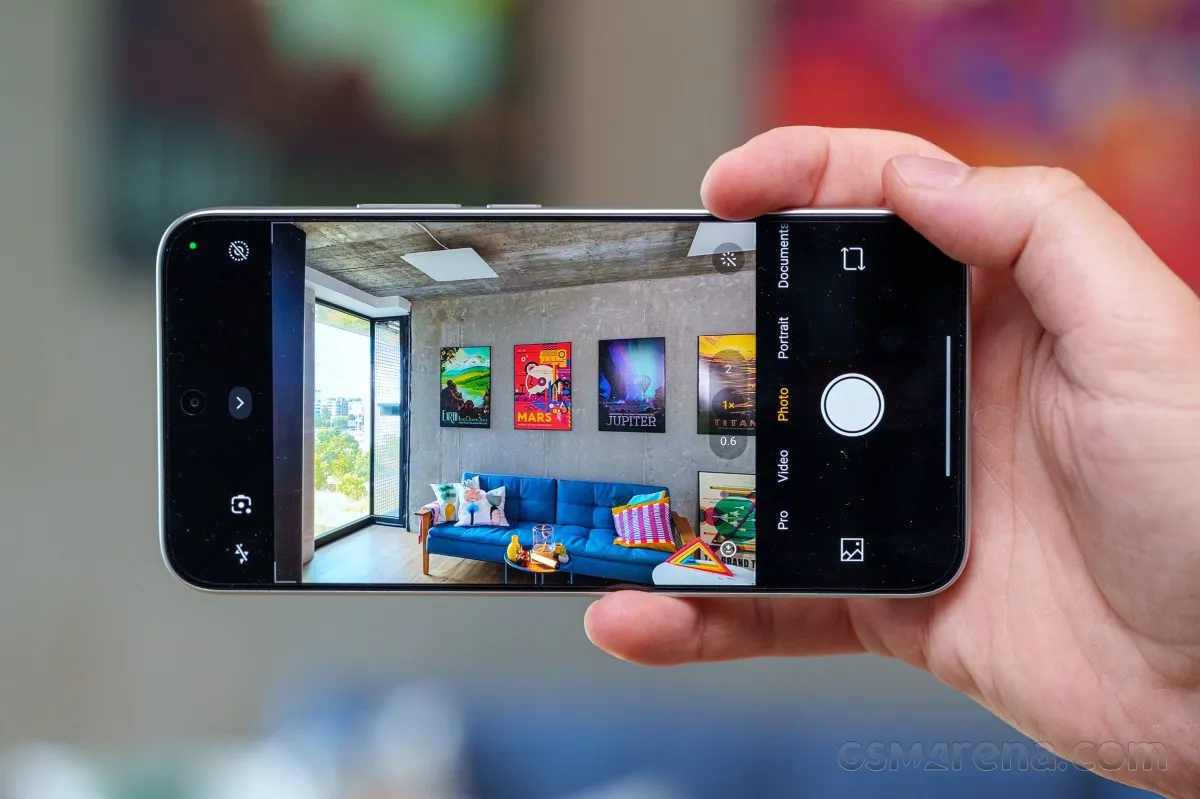
The ultrawide is a fairly popular no-frills 8MP unit with no AF. The selfie camera is also a relatively common sight among Xiaomis, the 32MP resolution being a quick indication that we're likely not going to be huge fans.
- Wide (main): 50MP OmniVision OV51A (1/1.95", 0.8µm-1.6µm); 26mm, f/1.5, OIS, PDAF (8cm - ∞); 4K30/1080p60 video recording.
- Ultrawide: 8MP OmniVision OV08F (1/4.0", 1.12µm); 15mm, f/2.2, fixed focus; 1080p30.
- Front camera: 32MP OmniVision OV32D (1/3.6", 0.61µm-1.22µm); 22mm, f/2.2, fixed focus; 4K30/1080p60.
Daylight photo quality
Main camera
The main camera photos are easy to like. They have very good detail with a grainy structure that lends them a relatively natural look. Dynamic range is generally good, but there is a bit of a high-contrast tendency that we'd probably like to see dialed down. Color rendition leaves little to be desired - the output is vibrant and there are no white balance oddities. Admittedly, one thing that's a little unusual is the focal length, which means slightly tighter frames than what we're typically used to - not an issue in itself, just an observation.












There's another peculiarity, related to focal lengths and framing - Portrait mode shots come out with a moderate crop and at 8MP instead of the regular 12.5MP resolution of the Photo mode shots. The portraits are also a bit less sharp on the subject, but not dramatically so. The subject detection is otherwise very good and the default blur level is quite believable. Of course, you can just shoot in Photo mode and get the native focal length and extra sharpness, minus the background separation.








Here's a handful of shots taken at the nominal resolution - perhaps under the right lighting and subject matter you might be able to extract a smidge more detail, but it's a slim chance, we'd say.




The 2x zoom photos are pretty good in brightly lit outdoor scenes, and a bit softer indoors, but overall a solid showing here.












2x on the main camera is where you'll probably get the best results in terms of macro-style shooting - the reproduction is pretty big and quality is quite reasonable.




Headshots at 2x are also just about good enough - our mostly indoor scenes do mean somewhat soft-ish detail, but it's not too bad. Again, the Portrait mode images are 8MP center crops, and they do have convincing subject separation and bokeh effect.








Ultrawide camera
The fairly simple ultrawide produces mostly underwhelming results, and we've seen sharper photos from similarly-specced units, so it's a bit of a bummer. That said, dynamic range and colors are pretty great - it's sharpness that's lacking, particularly in dimmer settings.








Selfies
Selfies on the Redmi Note 17 Pro Max are quite good. Well, not if you look at the 32MP files on a pixel level, in which case they'll look soft, but ultimately they contain good detail, just not 32MP of it. Skin tones are looking great indoors and somewhat too warm in bright outdoor settings. Dynamic range is great too. The lack of autofocus means no close-ups of your face, and low-light results aren't particularly sharp either.








Low-light photo quality
Main camera
Low-light results at 1x are quite good - very good for the class, we'd say. Dynamic range is excellent, white balance is on point, detail is great in all but the darkest of shadows.








The 2x photos aren't as exciting, with detail being relatively soft if you go into pixel-peeping mode. From a distance, things aren't too bad after all, and perhaps there's not a lot more you can ask for at 2x in this class.








Ultrawide camera
The ultrawide wasn't off to a great start in daylight and its low-light photos aren't too hot either. Its exposures run a little dim, though at least that means well preserved highlights. Detail is underwhelming, but it was like that in good light already, so no surprises here. Colors are pretty great, all things considered.








Video quality
The Redmi 17 Pro Max can record video up to 4K30 or 1080p60 with its main camera, depending on whether you prioritize resolution or frame rate, and that's also the dilemma on the selfie camera. The ultrawide camera maxes out at 1080p30. There's no HDR recording capability, and the Pro video mode does not feature Log recording either. There is a Pro video mode, though - with exposure controls, audio levels monitoring, and a tiny waveform - it's something.
You can hit '> play' below and use the '>| next' button to advance through the playlist of all video samples, or you can watch the full playlist on YouTube.
The 4K clips from the main camera are somewhere between good and very good for the class. Contrast is a touch too high and we'd prefer a flatter rendition but it's alright as it is. Colors are on point, detail is quite good too. 2x footage is quite usable too. The ultrawide's videos have their global properties remarkably well matched to those of the main camera, and it's pretty solid 1080p in terms of sharpness, but it's still just 1080p.

The main camera's low-light videos do have somewhat harsh highlights, but other than than they're pretty great - shadows are well developed, colors are on point, detail is very good. 2x footage is usable, if a little soft and grainy. The ultrawide is best avoided though.


There's a bit of leftover shake in the footage captured while walking and there's some focus hunting to be seen too, but it's not the worst. The clips recorded from a stationary position are nearly flawless, though.
Camera quality verdict
The Redmi Note 17 Pro Max looks like a bit of camera downgrade compared to the previous-gen top models, but it squeezes the most out of its somewhat inferior main camera and produces solid results for the class. Daytime photos and video at 1x are very good as are the low-light results at the camera's native zoom level. There's a bit more nuance to the 2x zoom quality, but it's still quite alright in good light and usable at night. The basic ultrawide, meanwhile, delivers basic results. Selfies are generally more than okay too, just don't expect 32MP worth of detail from them.
The competition, our verdict, pros and cons
The competition
The Redmi Note 17 Pro Max may have the largest screen, the largest battery, and the fastest charging in this lineup, but its performance has stagnated for a while.
This year it could be because of the chip crisis, while last year it might have been due to a lack of innovation, but it doesn't really matter. The Redmi Note series is synonymous with affordable and reliable daily drivers, but it seems the bang-for-the-buck ratio has moved towards Poco devices.
Considering the Note 17 Pro Max's launch price of $500, it's only fair to ask if there are better options out there.
That brings us to the first phone we'd suggest considering as a potential alternative - the Poco X8 Pro Max. It features the same screen and cameras, a similarly large battery with 100W fast charging, and a flagship-grade chip ready for gaming and everyday tasks.
Alternatively, the regular Poco X8 Pro comes more compact and at a lower price. It offers a smaller screen and battery capacity - yet still manages to impress with its stellar performance and battery life.
It's quite similar to the Motorola Edge 70 Pro or the Edge 70. You can get the 70 Pro at a similar price with a higher-quality screen, faster chip, four superb 50MP imagers and impressive battery life, even if it's not a match for the Note 17 Pro Max. Or you can get the thinner, lighter and cheaper Edge 70, at the expense of some oomph and a zoom camera.
The Galaxy A57 is another good option for better performance and a more versatile camera experience, but you will lose durability and battery life.

Our verdict
We are conflicted at the end of this review. The Redmi Note 17 Pro Max is not your typical Redmi Note, yet it is the one to shape this series and the next.
This Pro Max delivers on its promises for battery life and charging; it impressed us with its screen, and it even managed to squeeze the maximum photo and video quality from the otherwise basic cameras.
Even better, the Note 17 Pro Max offers an incredibly durable design, powerful speakers, and feature-rich HyperOS.
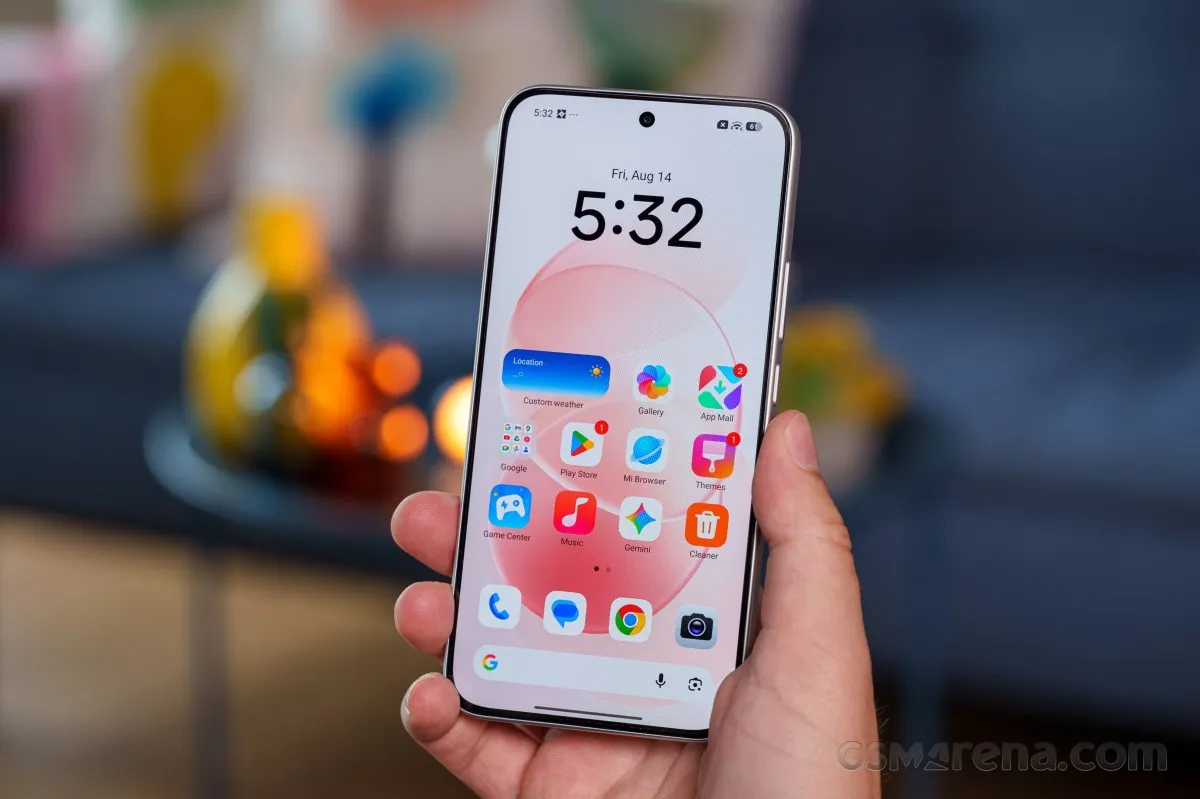
The chipset performance, however, is not a strong suit of the Redmi Note 17 Pro Max. In fact, the entire Redmi Note lineup has seen a notable decline in this aspect. It's not that the Max is lacking power, but it doesn't have the punch we are used to seeing.
With that in mind, the Redmi Note 17 Pro Max doesn't seem attractively priced at launch. Give it a few months, and it will probably become a great offer just in time for the holiday season. But if you need a new smartphone before that, it's best to shop elsewhere.
Pros
- Special attention to durability in all conditions.
- Bright high-res OLED, 120Hz, 68B colors, Dolby Vision.
- Great battery life.
- Super-fast wired and reverse wired charging.
- Dependable main and selfie cameras.
- HyperOS 3 is a very solid software package.
- IR blaster.
Cons
- Somewhat heavy.
- Pricey at launch.
- No improvements in performance or camera image quality.
- Only gets UFS 3.x storage speeds.