Sony Xperia 10 VIII review
Verdict
In-depth review of the Sony Xperia 10 VIII
Introduction, specs, unboxing
Introduction
Sony has always had its own way of doing things in the mobile space, refusing to follow the latest mainstream trends. There is a certain charm and even utility to this old-school approach, as it produces devices that feel more genuine, timeless and deliberately restrained in their design language, even though their features may not be at the forefront of innovation.
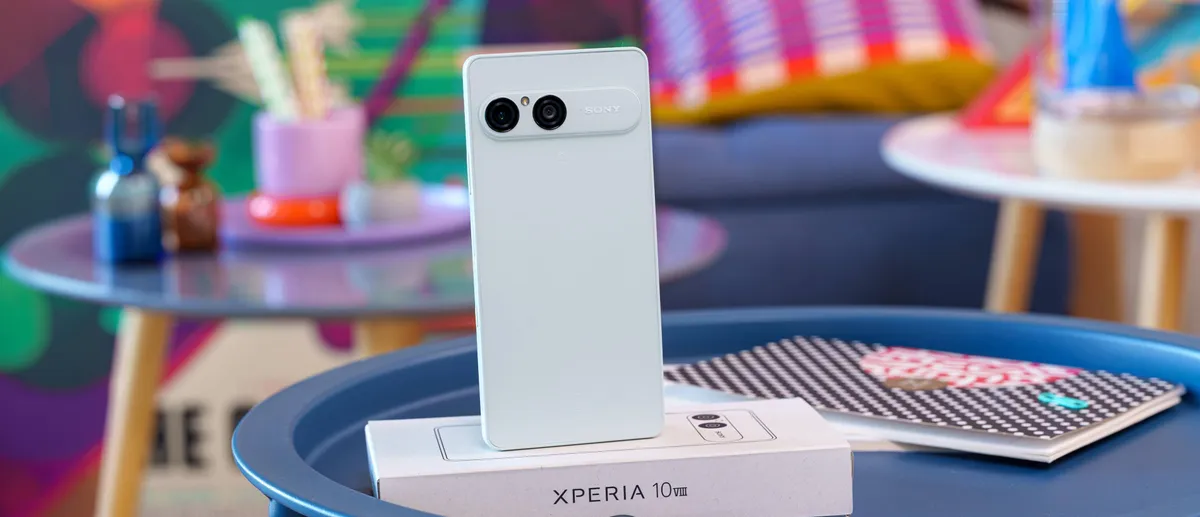
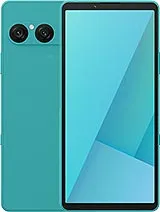
The latest entry in Sony's midrange series, the Xperia 10 VIII, is a poster child for this approach, with a utilitarian design that doesn't pay lip service to the latest trends. Like last year, you get understated aesthetics, with a uniform color across the frame and back, coupled with ample display bezels.
We dug deep into the phone's spec sheet to see what's different this year, and we came back empty. The display is essentially the same, the chipset is the same Snapdragon 6 Gen 3, and the battery is still a 5,000 mAh unit. The camera setup hasn't been modernized either.
Sony Xperia 10 VIII specs at a glance:
- Body: 153.0x72.0x8.3mm, 168g; Glass front (Gorilla Glass Victus 2), plastic frame, plastic back; IP65/IP68 dust tight and water resistant (low pressure water jets; immersible up to 1.5m for 30 min).
- Display: 6.10" OLED, 1B colors, 120Hz, HDR, 1080x2340px resolution, 19.5:9 aspect ratio, 422ppi; Triluminos display.
- Chipset: Qualcomm SM6475-AB Snapdragon 6 Gen 3 (4 nm).
- Memory: 128GB 8GB RAM; UFS; microSDXC (uses shared SIM slot).
- OS/Software: Android 16, up to 4 major OS updates.
- Rear camera: Wide (main): 50 MP, f/1.9, 24mm, 1/1.56", PDAF, OIS; Ultra wide angle: 13 MP, f/2.4, 16mm, 123-degree, 1/3.0".
- Front camera: 8 MP, f/2.0, 26mm (wide), 1/4.0", 1.12µm.
- Video capture: Rear camera: 4K@30fps, 1080p@30/60/120fps, gyro-EIS, OIS; Front camera: 1080p@30fps.
- Battery: 5000mAh; Wired, PD, QC.
- Connectivity: 5G; eSIM; Wi-Fi 6e; BT 5.4; NFC; 3.5mm jack.
- Misc: Fingerprint reader (side-mounted); stereo speakers.
This raises a lot of questions about Sony's reasoning for re-releasing essentially the same device under a new name. Unfortunately, we don't have the answers, but we do have a full review that puts the Xperia 10 VIII through its paces and judges it for what it is. For instance, what's not obvious from the numbers on the spec sheet above is that Sony promises improved screen brightness and better-sounding speakers for this model, so we'll make sure to put those claims to the test as well.
Unboxing
Sony has been going the minimalist and eco-friendly route with its packaging for some time now. The Xperia 10 VIII is no exception. It arrives in a very simple box made entirely from paper, bamboo and sugar cane fibers, which is admirable. Sony says some of the materials are recycled, too.
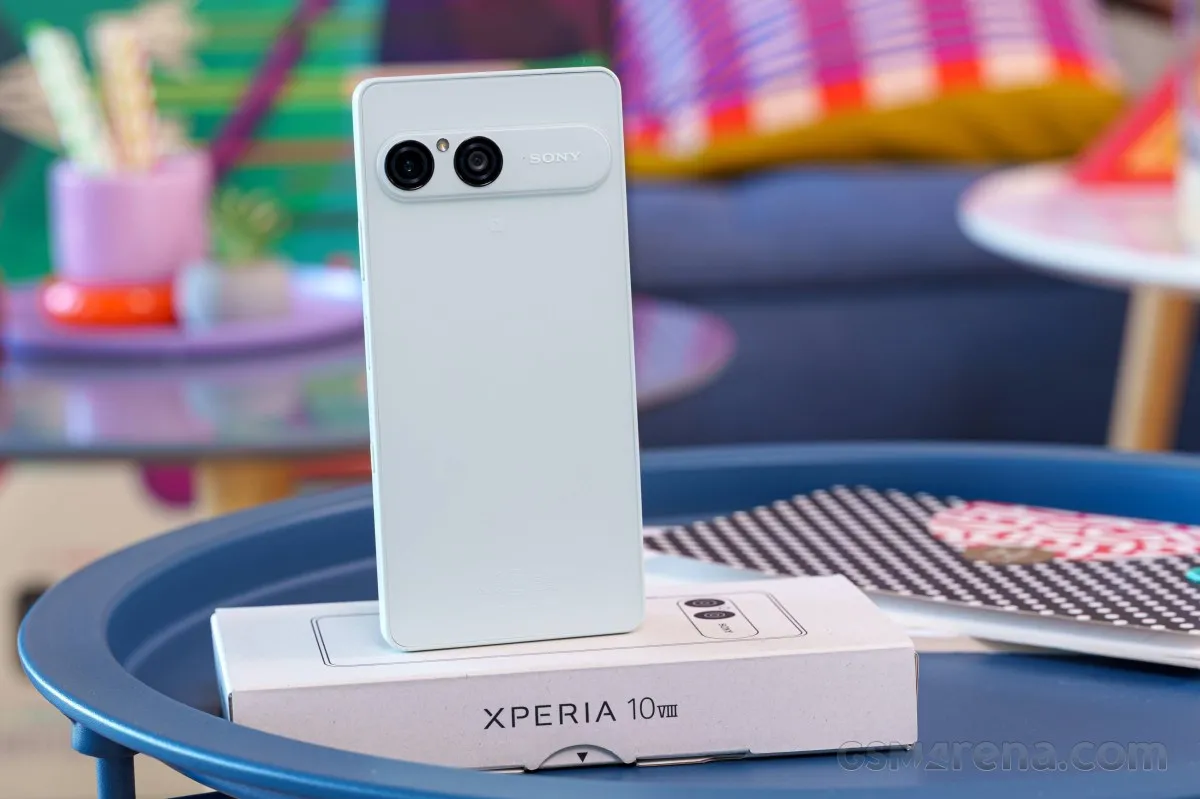
Since the Xperia 10 VI, Sony phones have been shipping without not only a charger but also a USB cable of any sort, so we didn't expect things to be different here, and they aren't.
The phone supports charging at up to 30W using a conventional USB-PD charger, so you have plenty of affordable options to choose from.
Design, build quality, handling
Design, build quality, handling
As we said, the design hasn't changed much from last year's model, and frankly it is quite retro. Nobody really does phones in this manner anymore. And while some design points are more subjective and up for debate, even things like the wider display bezels can be spun in a positive way if you try hard enough, other bits just feel out of place on a phone from this price range.
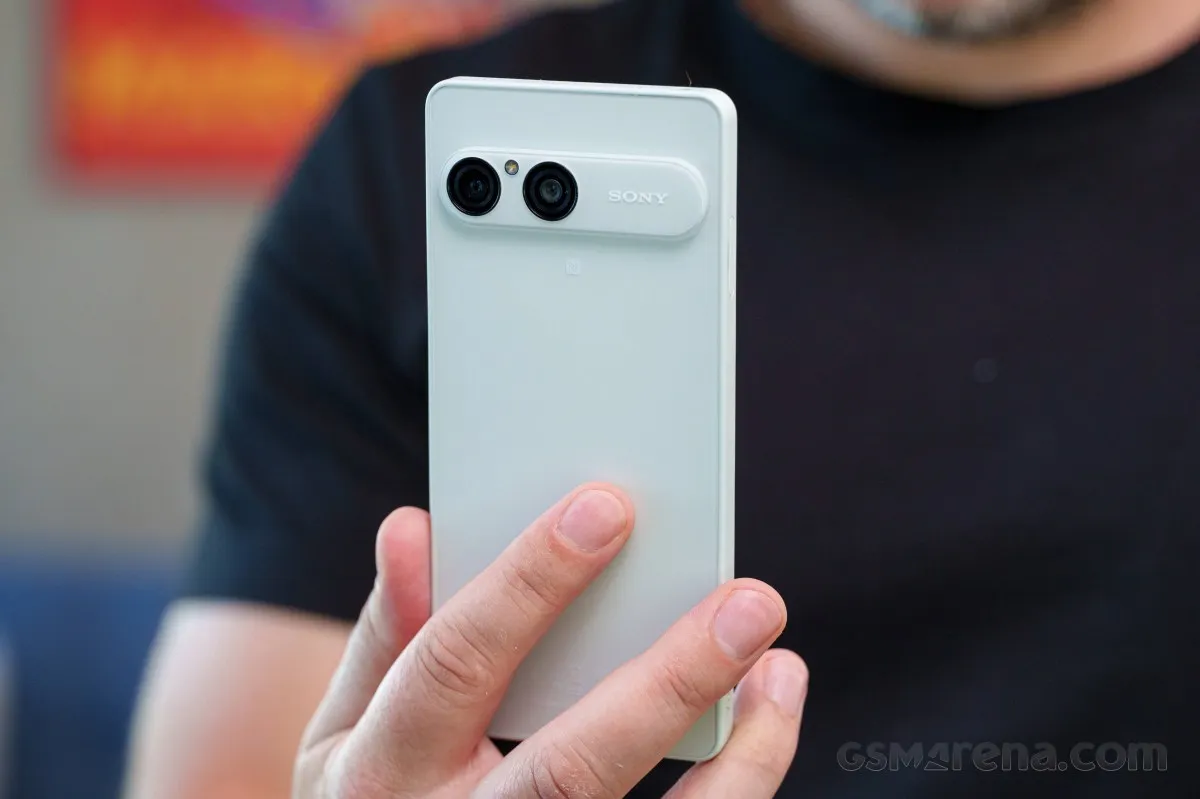
That is particularly true of the plastic build. Again, we have nothing intrinsically against plastic as a building material. It is relatively light and pretty strong for its weight. Also, it doesn't scratch or dent quite like metal. Well, at least some cheaper metals do. Our only point is that a phone this expensive should perhaps offer a bit more premium bill of materials.
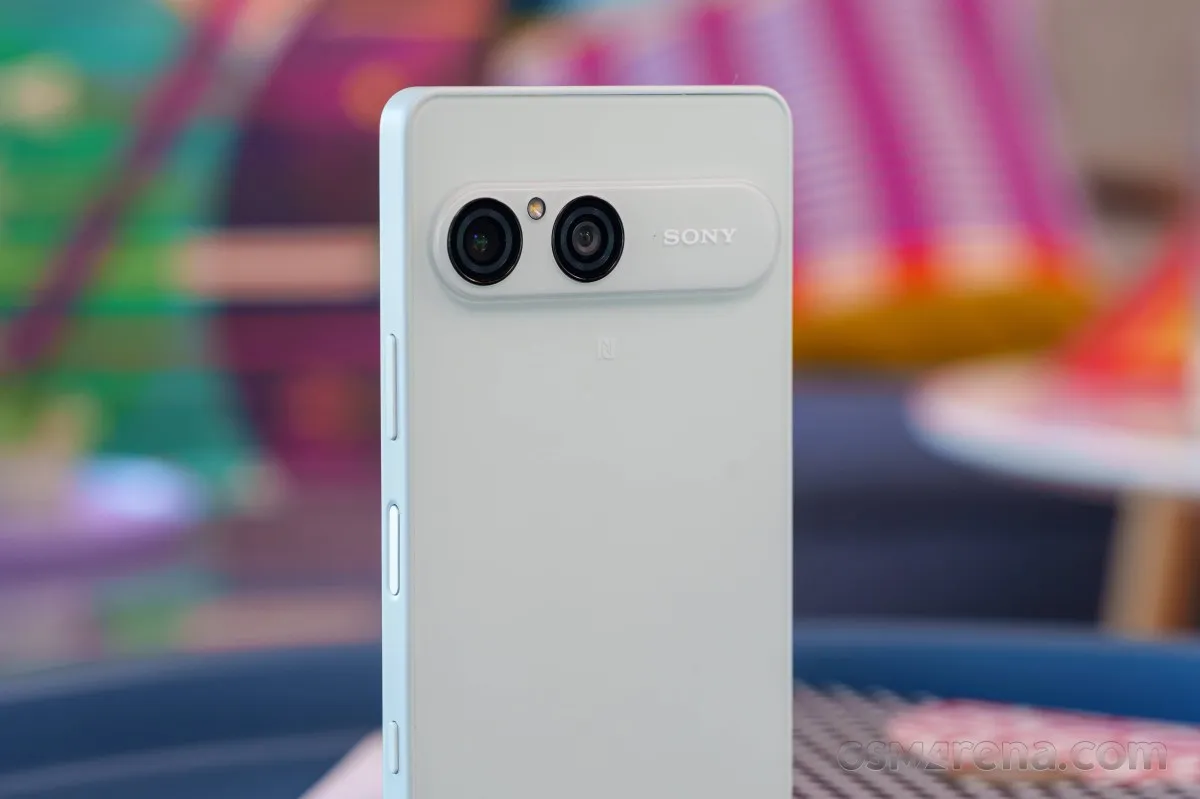
Sony could have at least made the back panel from some sort of hardened glass. Though, it's not entirely lost on us that going for plastic there as well does ironically make for a pretty distinctive look and feel in 2026.
At least the front is covered with Gorilla Glass Victus 2 - technically not the best Corning currently has to offer, but certainly good enough in our book.
Also, the Xperia 10 VIII gets a proper IP65/IP68 ingress protection rating, which should let it survive a dip in up to 1.5 meters of fresh water for up to 30 minutes.
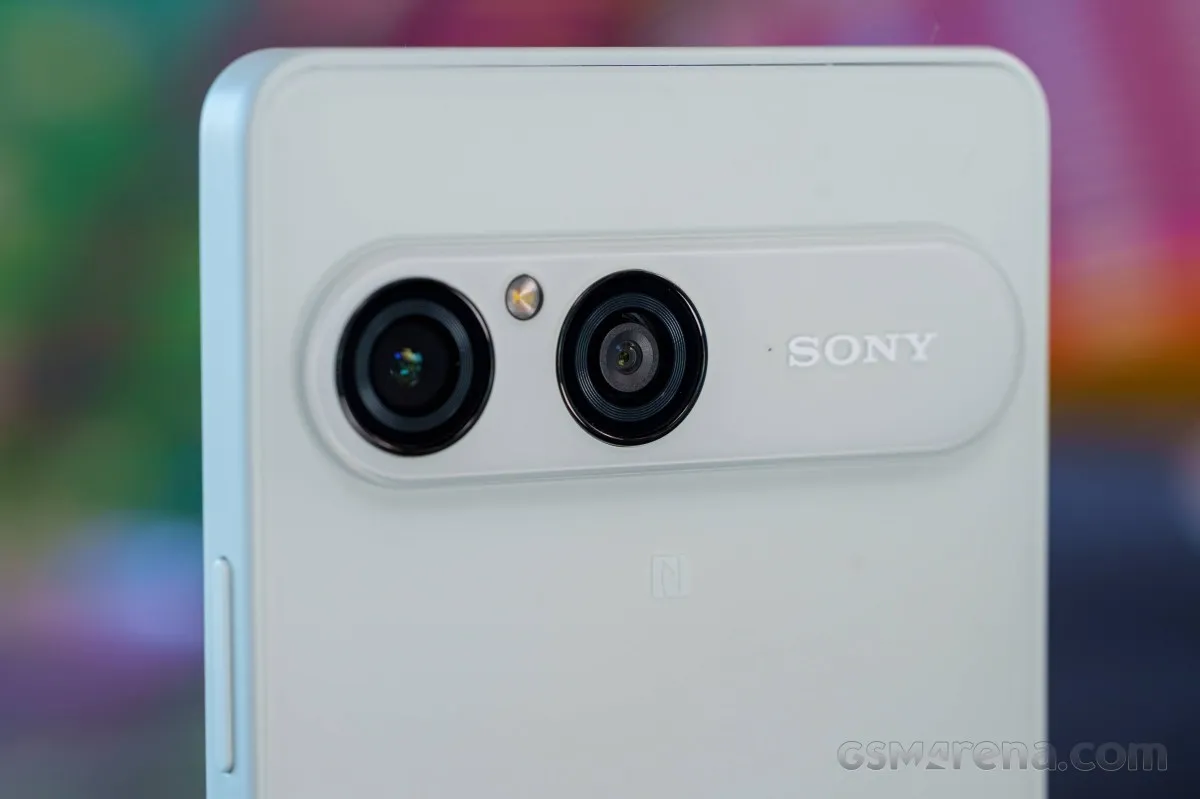
So, Sony didn't change materials. We can live with that, but why not at least play with the design and try to make it distinctive? It can still be just as clean and simple as always, but what Sony has done here is essentially copy-paste the camera island from the Xperia 10 VII. Going from the Xperia 10 VI to the Xperia 10 VII, at least the camera island went from vertical to horizontal.
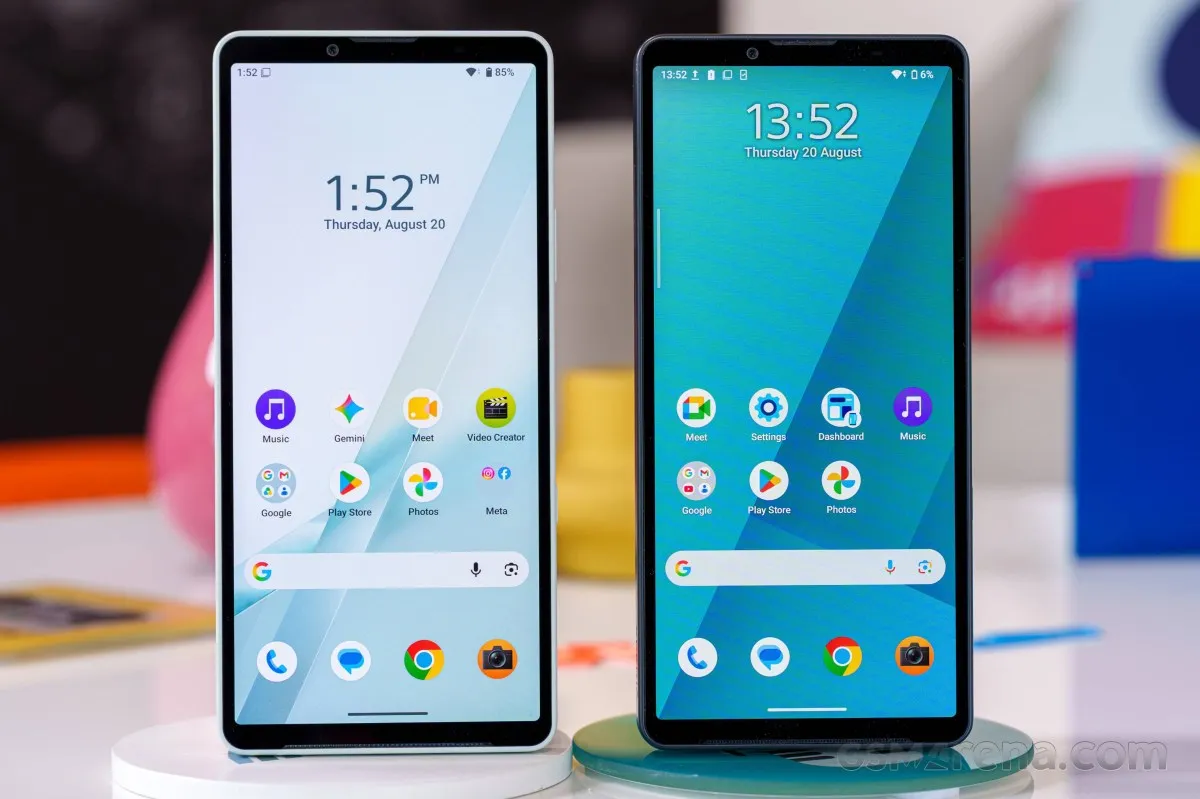 Left: Sony Xperia 10 VIII • Right: Sony Xperia 10 VII
This year it seems like the design team just took a collective break. Well, ok, that's not entirely fair; there is a new transparent layer on top of the Xperia 10 VIII camera that wasn't there last year. It is frankly really hard to notice, but it is there. We guess that was the most minimal change that required no new molds.
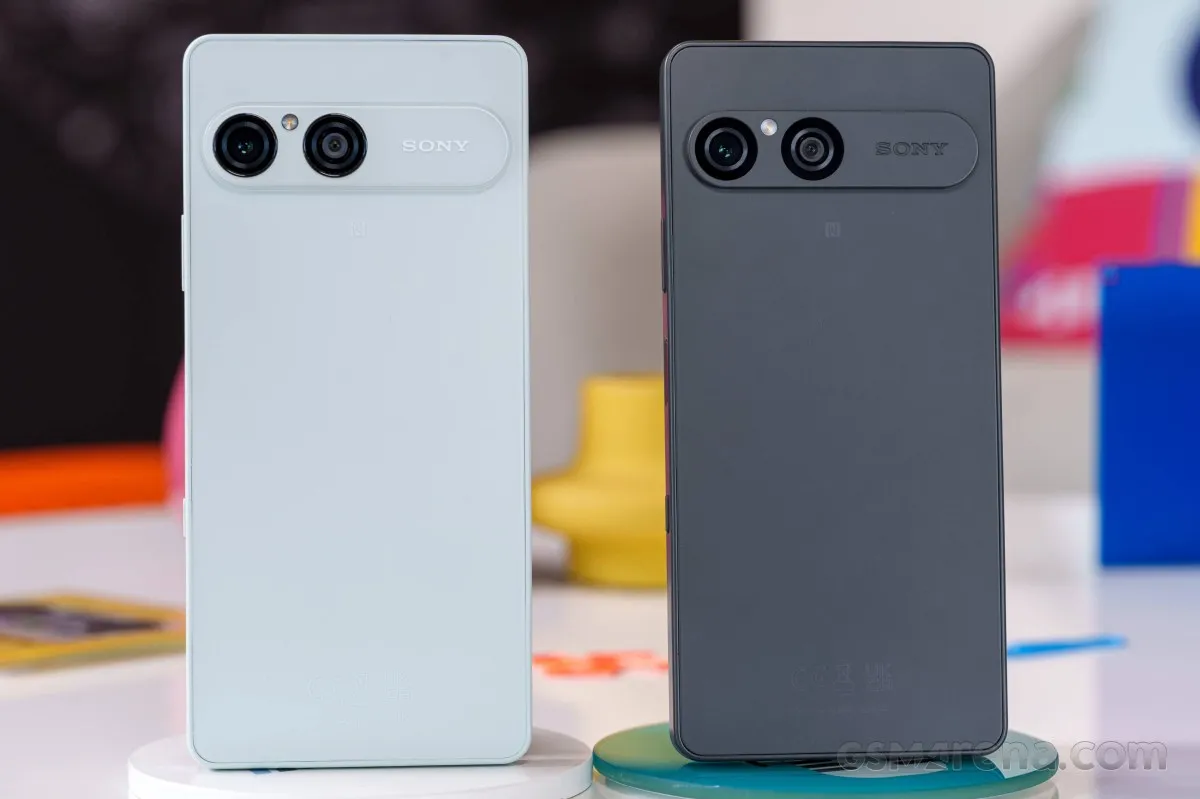 Left: Sony Xperia 10 VIII • Right: Sony Xperia 10 VII
At least the color selection appears to be slightly different. There is, of course, white, which has sort of become a staple of the family. It is called Frozen White. Beyond that, you can also get the phone in Frosted Gray or Misty Lilac.
There is nothing to particularly point out or really get excited about when it comes to the overall shape here either. It is the same as before and is oddly a mixture of current trends like flat sides and a flat front and back, plus rounded corners, but not entirely, since said rounding is very mild by modern standards and barely extends to the actual display corners. Well, sort of. While only a few pixels seem to be physically missing from each display corner, for some reason Sony decided to make the actual UI corners a bit "rounder", effectively deciding not to use a few more pixels in each corner. Weird.
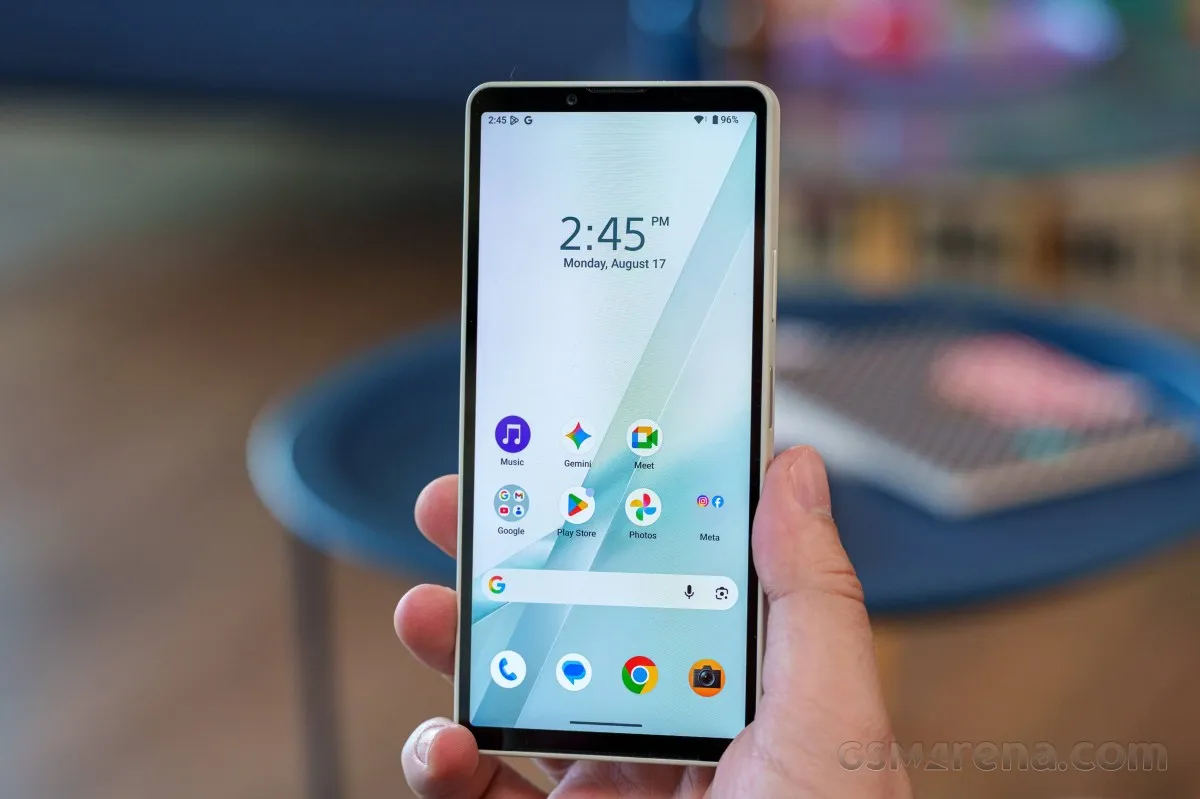
And, of course, there are the big display bezels that really complete the retro aesthetic.
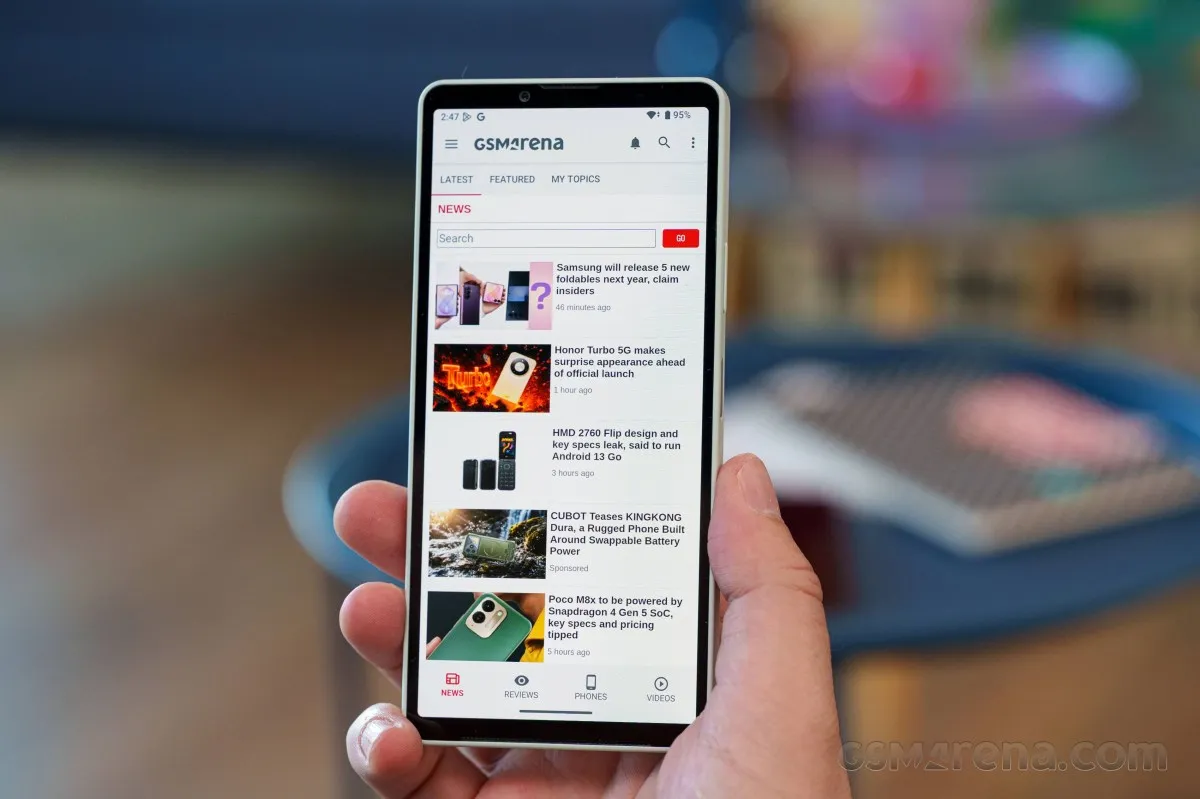
Let's talk about the front a bit more since it really does come straight from a bygone era of smartphone design. There is substantial padding to the left and right of the display and even a sizeable bottom chin. Sony couldn't possibly still be sourcing and using displays that actually have their control board sitting right underneath, taking up space? Right? No, we think that the much more plausible explanation is that this space is taken up by the bottom front-facing speaker. That's one pretty unique thing the Xperia 10 line still has going for it.
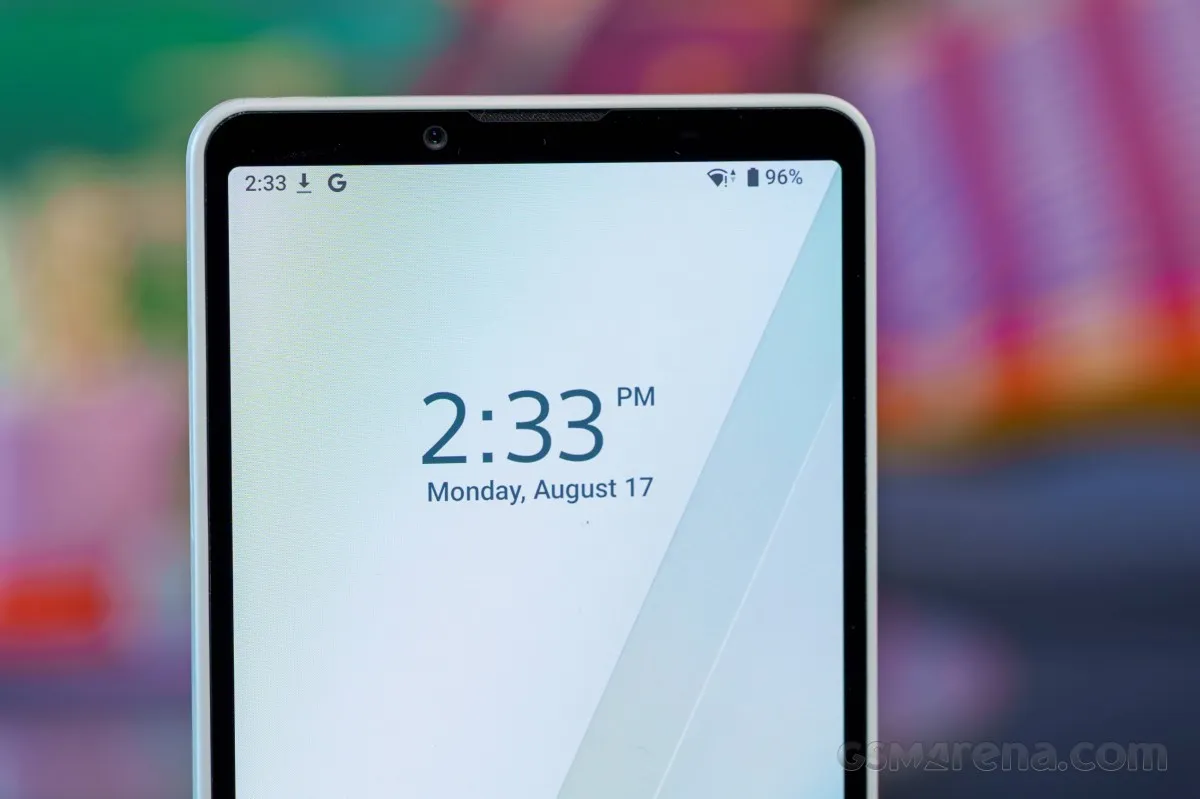
Anyway, the sizable area above the display does have its perks. For one, there is enough room there to house the selfie camera, which leaves the display on the Xperia 10 VIII absolutely uninterrupted. No punch hole or anything of the sort. Frankly, we kind of miss that.
The rest of the retro top bezel we can frankly take or leave, like the clearly distinguishable earpiece/top speaker and the plainly visible window for the light and proximity sensors.
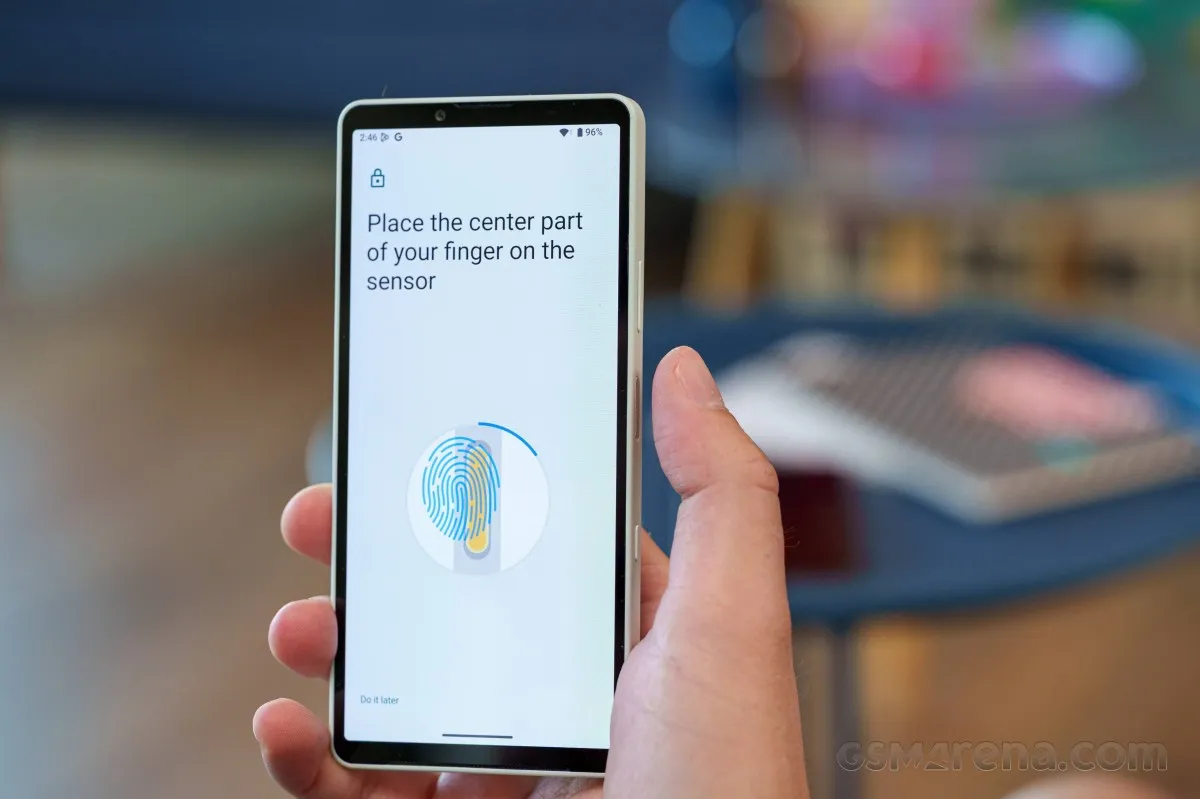
The quirkiness continues with the Xperia 10 VIII control set and layout. Again, depending on what you value and prefer, this could be a big win for you or perhaps a source of annoyance. Well, if you dislike a side-mounted fingerprint reader for one reason or another, this could be a big win for you. We personally think it is a good place to have a fingerprint reader. Plus, this one is big enough, on top of being a traditional capacitive unit, to be both really snappy and reliable. Still, we get how it might not be everybody's cup of tea. There is no technical reason Sony can't go with an under-display reader, making this a deliberate choice.
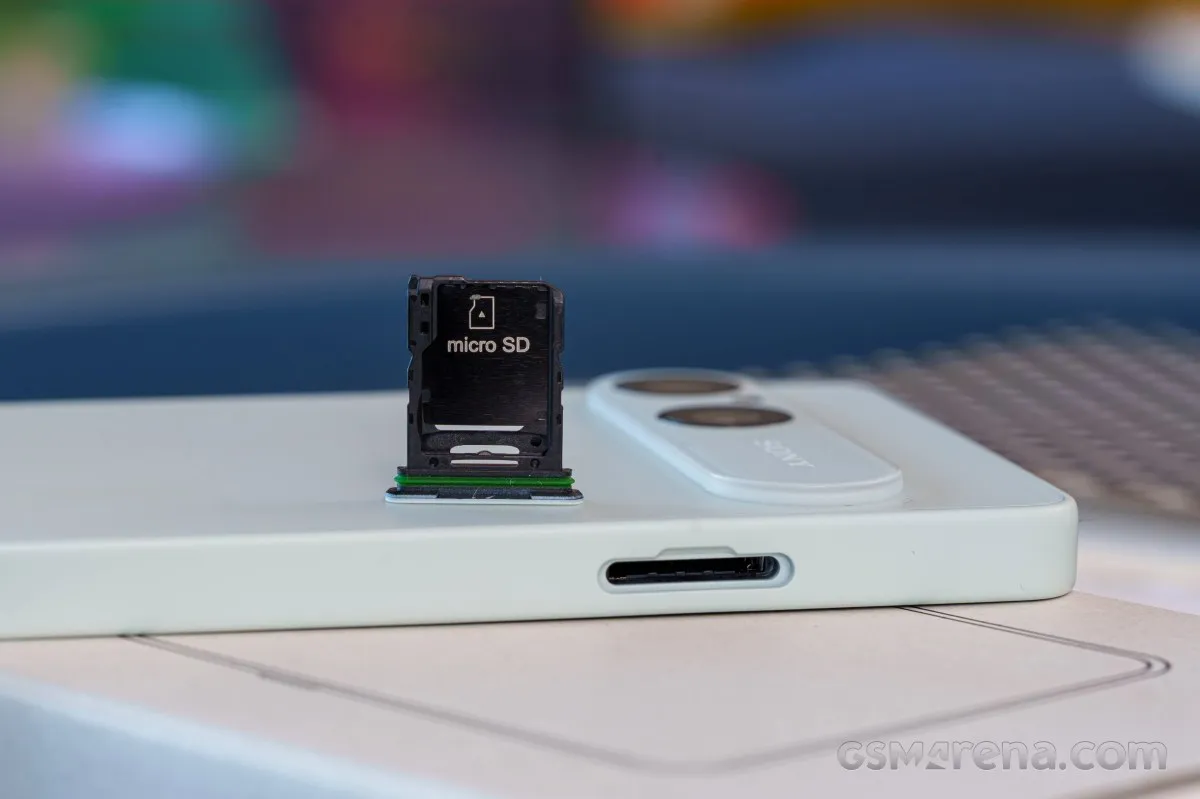
So is the inclusion of a 3.5mm audio jack. You don't really see many of those anymore. The same is also true for the microSD card slot. It is a shared slot that makes you essentially decide between a second physical nano-SIM and extra storage. Sony also has its signature (and probably patented since you don't really see it elsewhere) toolless SIM tray that you can just pull out.


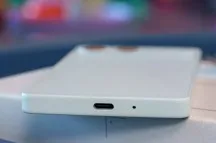
Below the power key sits Sony's trademark camera shutter button, which launches the camera with a long press and takes a screenshot with a short press. Unfortunately, it can not be remapped to other functions and is not two-stage either. Just Sony being particular once again.
All the buttons are well-positioned and quite clicky with good tactile feedback. We have no complaints.
Our lab tests - display, battery life, charging speed, speaker
Display
Very little seems to have changed in the display department. Sony gave up on its unique 21:9 aspect ratio last year, and it is seemingly not coming back. The display panel is the much more conventional 19.5:9. This does take away from the uniqueness quite a bit, but seeing how the display is still pretty small with a 6.1-inch diagonal, we think that this aspect ratio makes sense.
With a resolution of 1080 x 2340 pixels at this diagonal, the density ends up being a very sharp 422 ppi.
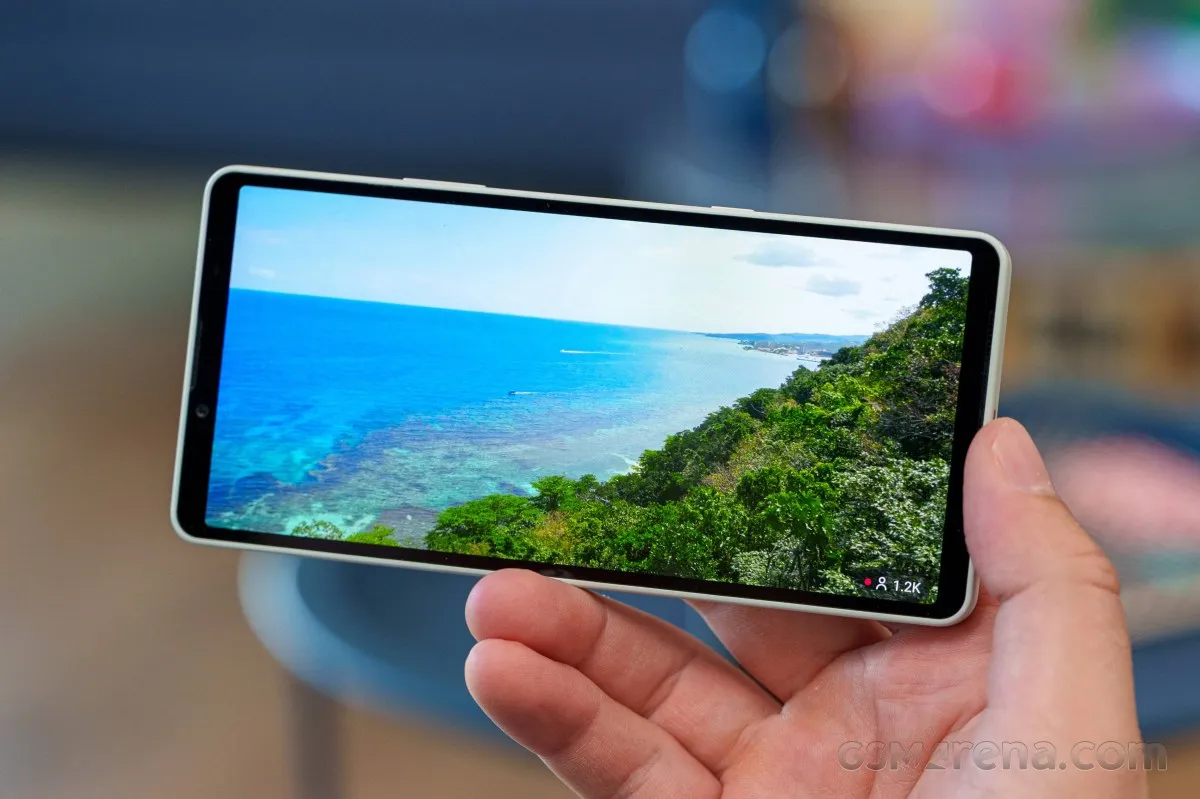
Sony says that it has added automatic color adjustment to the surroundings for this generation, which is a bit hard to test in practice. We won't delve into it too deeply.
The rest of the display specs look pretty familiar on paper as well. It's an OLED panel of the simpler LTPS variety, so no truly dynamic refresh rate switching here. You still get a maximum of 120Hz, which is pretty much industry-standard at this point. Though, it is perhaps worth remembering that this is just the second Xperia 10 generation to offer a high refresh rate. 10-bit color depth with Sony's own Triluminos display technology (whatever that actually entails in 2026) and some rather vague HDR certification on top.
Sony's Xperia 10 has never topped brightness charts, but Sony has always delivered decent-enough brightness for these phones to be usable outdoors, so we can't complain too much.
This year, the Xperia 10 VIII allegedly brings 50% higher brightness than last year. That we can test.
In auto mode, with a 75% window (which is our standardized test), we got 1,509 nits max on the Xperia 10 VIII, which is markedly better than the Xperia 10 VII and plenty for a comfortable outdoor experience. We didn't see any notable boost with a 10% window, which is unusual for an OLED display.
We measured a minimum brightness output of around 1.8 nits at point white, which is decent, though not great. There is an extra-dim display option buried in the Accessibility settings menu that brings down that figure to a much more competitive 1.0 nits or so.
Max display brightness test
White test pattern (nits)
- Manual (75% fill)
- Auto (75% fill)
- Peak Auto (10% fill)
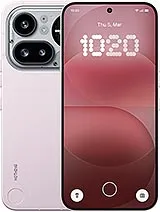
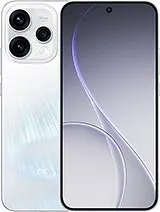

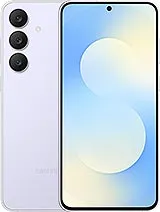
 Pixel 10a
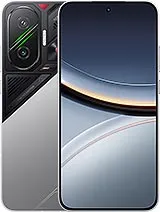 Poco F7
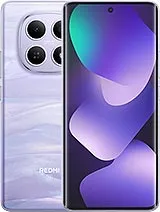 Redmi Note 15 5G
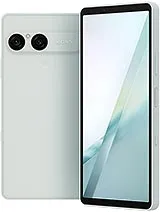 Xperia 10 VIII
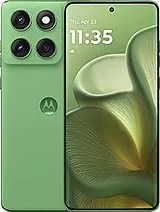 Motorola Edge 60
 Poco X8 Pro
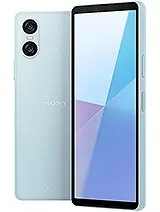 Xperia 10 VI
Refresh rate
Sony seemingly hasn't improved the high refresh rate handling for this second generation of 120Hz Xperia 10 display, and it's not like they got it right the first time around. There is still just one option in Settings - High refresh rate On or Off. The On mode offers some automatic switching but only between 120Hz and 60Hz (no middle 90Hz). Also, the phone seems to stick to 120Hz operation more often than not, even when the content being displayed could work well with a lower refresh rate to save some battery. Apps like Chrome and YouTube do feature some automatic switching down to 60Hz to conserve energy. Just don't expect to get automatic switching in most third-party apps.
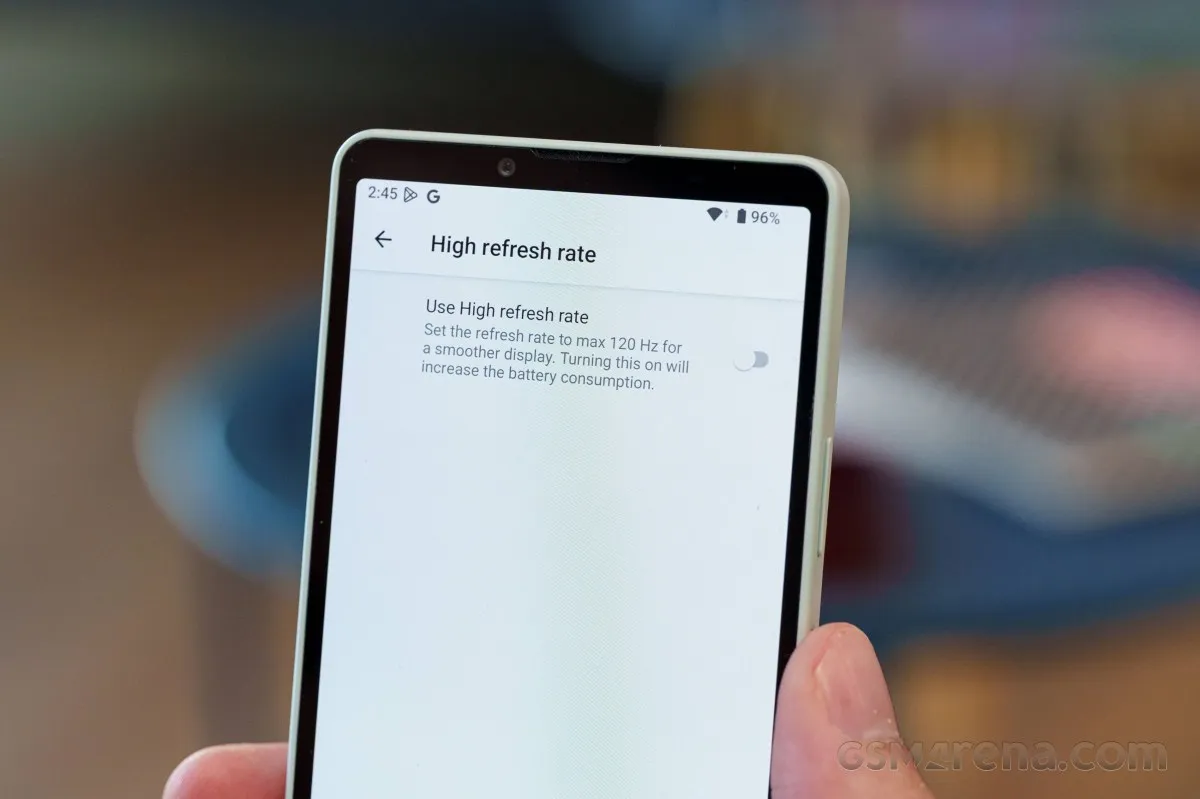
Actually, get this: the phone automatically switches down to 60Hz most frequently when it detects a game. This sounds like the opposite of what it should be doing. Buried deep in the Developer options menu is a toggle that turns off the 60Hz limit for games. Flipping it on allowed most of our test games to run at 120Hz. So, at least there's that.
HDR Video
There is definitely some HDR video support, and it seems to work just fine in apps like YouTube and Netflix.
Battery life
The Xperia VIII is equipped with a 5,000mAh battery. In our tests, it got a better Active Use Score than its predecessor, but the delta is small. You can reliably count on one day away from the charger, but not much else, even though Sony's marketing is generally focused around the two-day mark. Most competitors in the segment tend to offer anything from slightly better to markedly better battery life.
Charging speed
Sony tends to keep a tight lip when it comes to the Xperia 10's charging capabilities. All we really know is that it supports standard USB Power Delivery (PD), which is always great to see.
Sony does not provide a formal maximum wattage rating, though. In our testing, we found that a 30W PD charger is perfectly adequate to saturate the charging capabilities of the Xperia 10 VIII. Measuring the charging cycle, we never really saw a spike above 26W, with the phone spending most of its time around 19W.
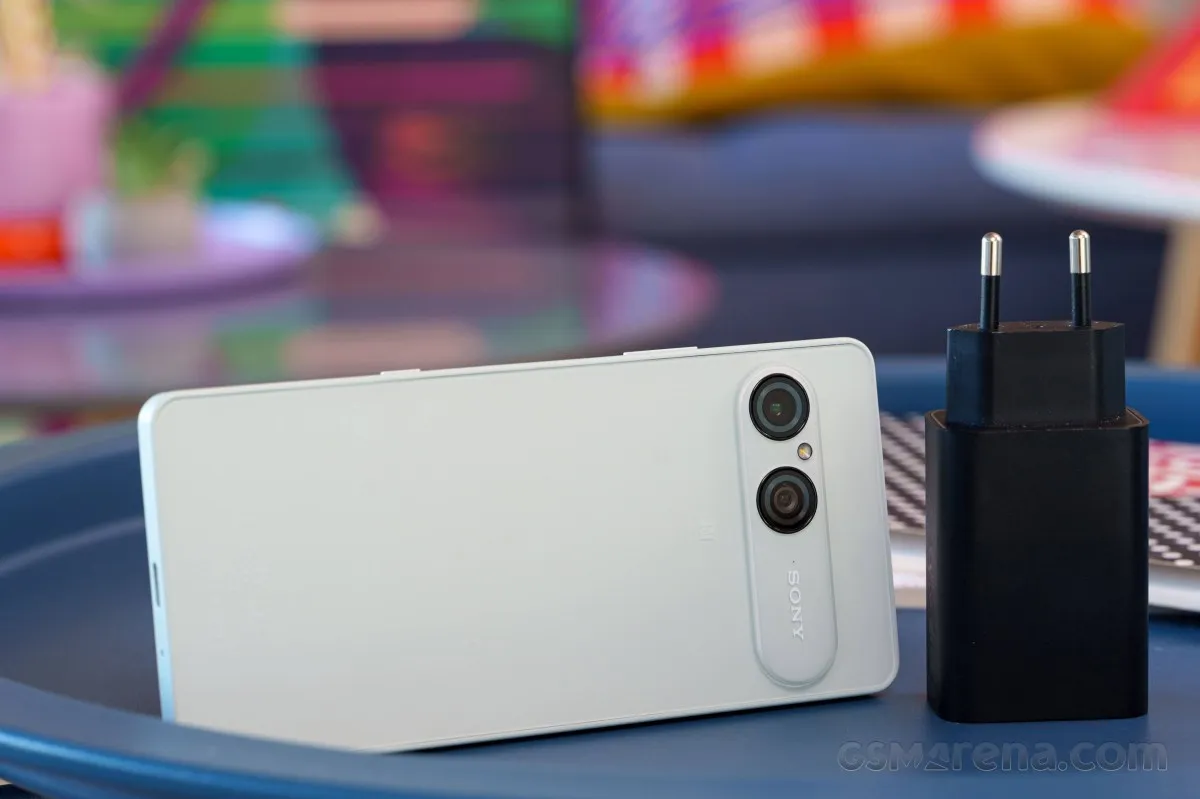
That's not a huge amount of current by modern standards, and it shows. At least, Sony seems to be tuning its charging in small increments every generation, achieving some marginally better results. That's encouraging and everything, but even so, the Xperia 10 VIII remains one of the slowest-charging devices in its price range.
Charging speed
- in 15 min
- in 30 min
- Time to full charge (from 0%)
Poco F7
 Motorola Edge 70 Fusion (India)
Pixel 10a
Motorola Edge 70 Fusion (India)
Pixel 10a
 Redmi Note 15 Pro 5G
Xperia 10 VIII
Redmi Note 15 Pro 5G
Xperia 10 VIII
 Xperia 10 VII
Xperia 10 VI
Xperia 10 VII
Xperia 10 VI
Sony is kind of one of the pioneers when it comes to battery longevity. We remember the longstanding Qnovo partnership and believe many of the core ideas from that design made their way across the industry. While we don't really see any real innovation in the space from Sony these days, the strong foundation is very much present.
The system now carries the much more generic Battery Care title and offers a choice between a constant charging cap, a mode with a flexible time-based limiter and a full auto mode that learns your charging pattern.
The goal of the system is to reduce the time the battery spends charged at 100%, since that is generally what causes the most degradation to the Li Ion chemistry.
Sony also has a bunch of proprietary charging protections in place to keep the battery reasonably cool, as high temperature is another significant source of battery degradation.
The official marketing tosses around an "up to 4-year battery health" promise, which we see no reason not to believe, especially if you also make sure not to leave the battery absolutely empty for any prolonged time and not expose it to temperature extremes. Just the usual sensible things.
Speakers - loudness and quality
Sony originally introduced its dual front-facing stereo speaker setup with the Xperia 10 V and has kept it mostly unchanged ever since.
Having the speakers facing the user is not something you see too often, and it certainly provides a great stereo effect, great channel separation and excellent balance. It's the perfect location and orientation for multimedia consumption.
While this particular Xperia 10 speaker setup has generally been getting louder over the past couple of generations, this time we measured a marked decrease in loudness. Nothing major in practical terms, but still worth noting. It still gets the same Good score on our scale.
Actual sound quality, however, seems a bit better than last year. Sony says the new setup should have about 30% richer and deeper bass. Then again, it should also apparently be up to 15% louder. The latter is not the case as far as we can tell, but we definitely think the new model sounds much cleaner.
In keeping with its audio pedigree, Sony incorporates a range of audio optimizations and codecs into the mix. There is 360 Reality Audio, which unfortunately only works with a limited selection of subscription music services. There is even a complementary feature that claims it can upmix regular stereo audio into a 360-degree compatible one. Sony's DSEE Ultimate general audio upscaler is also on board. There is also support for Qualcomm AptX Adaptive and both Hi-Resolution Audio and Hi-Resolution Audio wireless.
Of course, the Xperia 10 VIII gets a 3.5mm audio jack, which we are sure will still be appreciated by many prospective buyers.
Use the Playback controls to listen to the phone sample recordings (best use headphones). We measure the average loudness of the speakers in LUFS. A lower absolute value means a louder sound. A look at the frequency response chart will tell you how far off the ideal "0db" flat line is the reproduction of the bass, treble, and mid frequencies. You can add more phones to compare how they differ. The scores and ratings are not comparable with our older loudspeaker test. Learn more about how we test here.
Connectivity
The Xperia 10 VIII is a 5G device. It supports SA and NSA Sub-6 connectivity. Our review unit is a single-SIM model, but as far as we know, like previous generations, a dual Nano-SIM variant will exist for some markets. There is a microSD storage slot on the SIM tray as well. There is eSIM support on our unit.
The Xperia 10 VIII has GPS, GLONASS, GALILEO, BDS and QZSS support for location services. Local connectivity includes dual-band Wi-Fi 6 and Bluetooth 5.2 with LE, aptX HD, aptX Adaptive, Hi-Res Audio and LDAC support. There is NFC on board as well as a 3.5mm audio jack. No FM radio receiver, though.
The Type-C port is backed up by a USB 2.0 connection, which is a theoretical maximum of 480 Mbps throughput. Don't expect anything else fancy either, like video output over USB Alt mode.
The Xperia 10 VIII has a good set of onboard sensors. There is a BOSCH bmi26x accelerometer and gyroscope combo, an AKM ak0991x magnetometer and compass combo, and a SENSORTEK stk3a5x light and proximity combo. That's a proper hardware proximity sensor and not a virtual one. There is no barometer.
So basically, it's the exact same as last year's model, which is no surprise. We don't think Sony changed anything on the main logic board.
Software and performance
Android 16 with a clean Sony shell
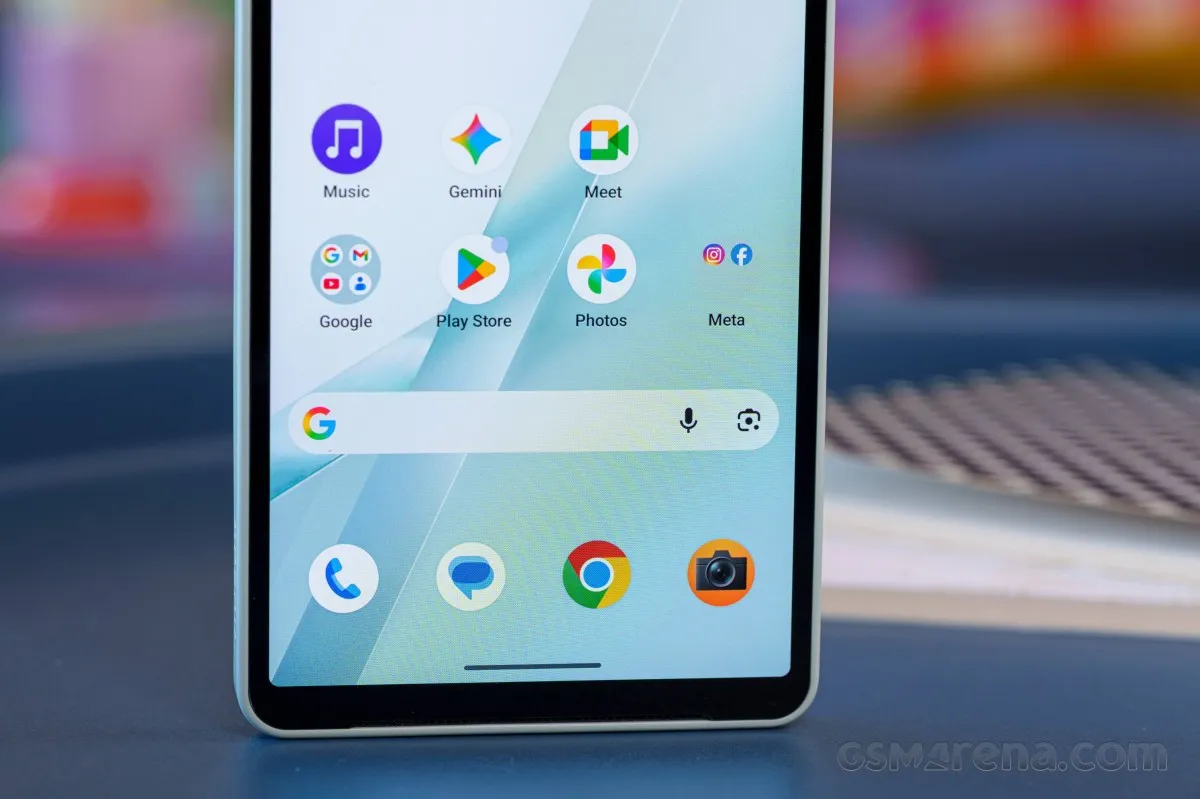
Sony has traditionally had this very clean and minimal approach to Android, and the Xperia 10 VIII is no exception. Out of all the current crop of Android devices, Sony is arguably one of the closest to AOSP. In fact, we would even go as far as to say that in some aspects, this OS is even more "stock" than what you get with a modern Google Pixel. Figuratively speaking, of course.
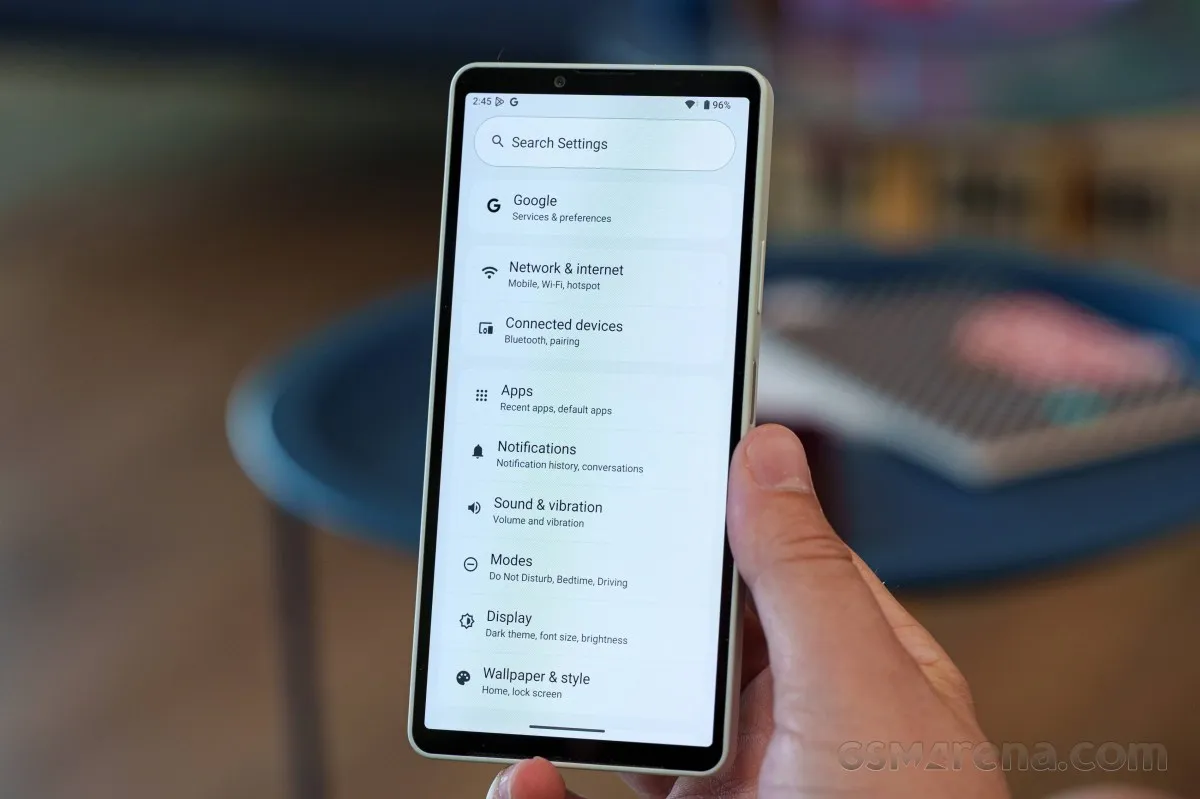
The software support promise for the Xperia 10 VIII currently stands at 4 years of OS updates and 6 years of security patches.
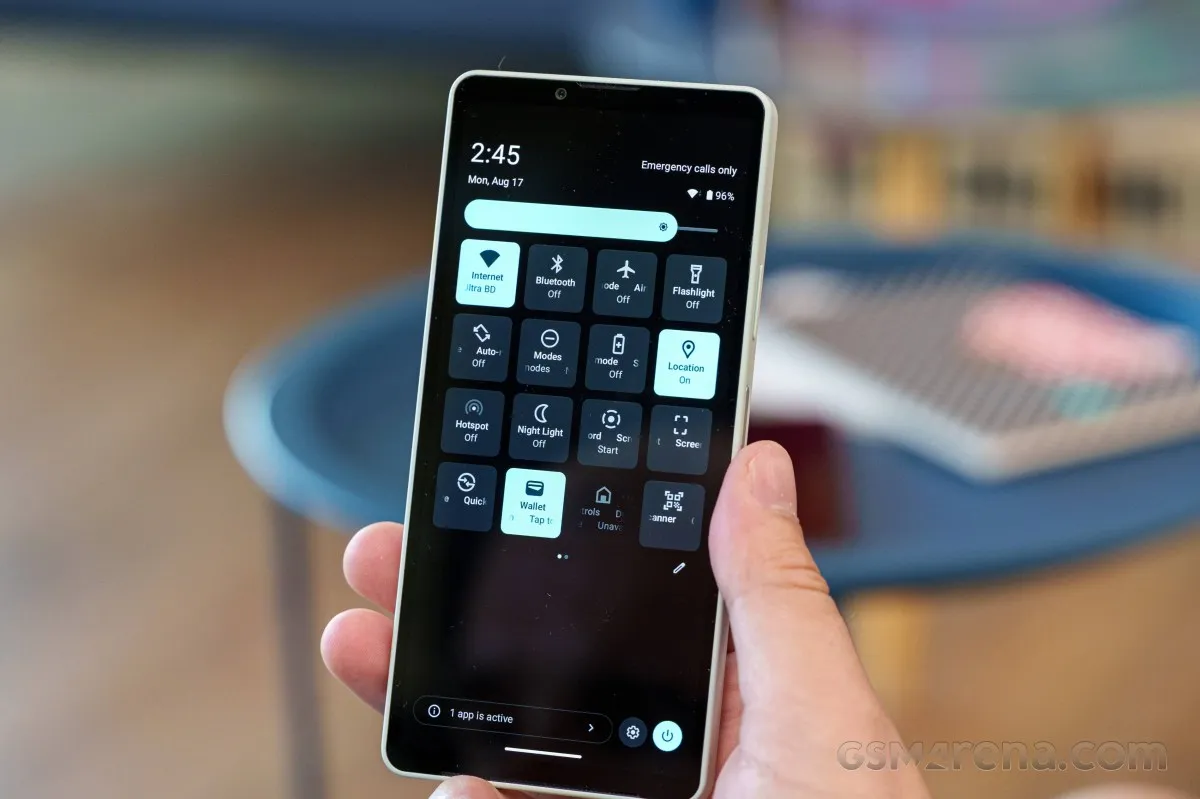
Sony's overall UI is very clean and even a bit retro. The notification shade uses compact square buttons. It's definitely a look we haven't seen often. It has an old-school vibe like some other parts of the phone.
On the plus side, the clutter is so minimal that you don't even get a full set of Google and Sony apps out of the box. The initial setup wizard advises you to download these from the Google Play Store, but you can easily opt not to.
Besides that, you get a standard non-alphabetized app drawer with a search and a horizontal carousel for recent apps, complete with a quick shortcut to enable a multi-window view.
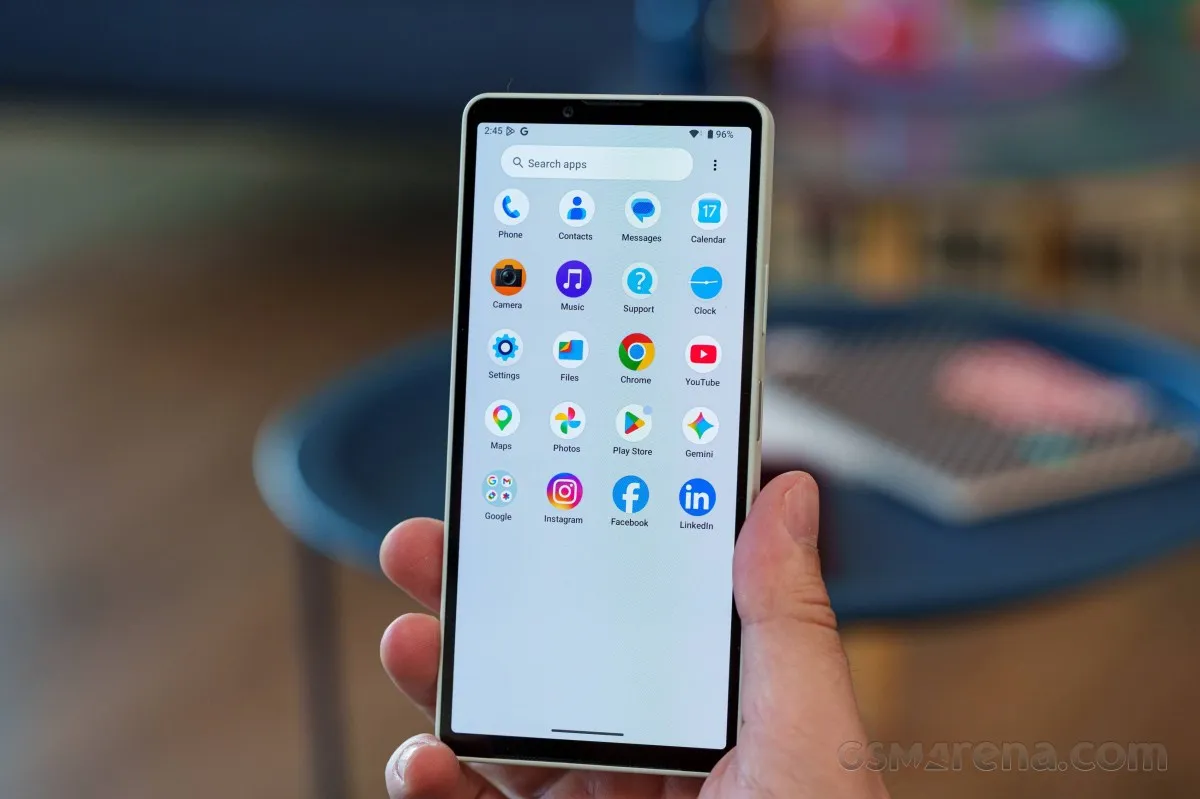
Side Sense is one of the few additional features Sony has tacked on to the otherwise vanilla OS. A handle on the side of the phone opens up a menu of shortcuts to apps and features, most of them user-configurable. But not even Side Sense is enabled by default.
There's a fairly standard set of gestures for call handling, as well as a one-handed mode and smart backlight control. In this menu, you'll find the navigation options with the two basic types available: gestures or a navbar.
Similar to previous generations, the Game Enhancer utility is missing on the Xperia 10 VIII. Sony's Music player is on board, and so is Sony's Video Creator app, while Google's Photos and Files are used for gallery and file management purposes.
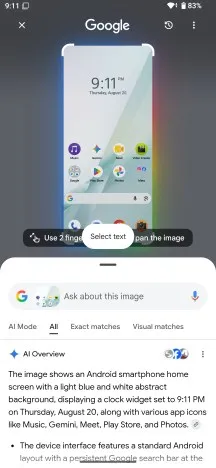
Sony is one of the few manufacturers that hasn't heavily invested in developing AI of its own. Still, the Google Gemini app is pre-installed, so you can use it as a chat-based AI. There is Circle to Search as well. And you can use the AI-powered image editing features inside Google Photos, which is the default gallery app.
That's fine and all. We are just as tired as the next person from endless AI being shoved in every corner of the experience. That said, we feel like Sony could still put in some extra effort where it actually counts. The settings search interface is still literal, with practically no fuzzy search, let alone smart search. So unless you actually know what the option is called, good luck finding it.
There is seemingly one new software addition this year. Sony calls it the "Rewards and Pay" menu, but that name is a bit narrow for what it actually is. Double-press the power button, and you essentially get a fully customizable quick launch interface with large icons, multiple pages and the ability to add any app you want to the list.
Once you launch an app from this menu, you also get a quick on-screen shortcut to open the menu back up. Not sure how useful this menu actually is, but we take what we can get when it comes to Sony.
Benchmarks and performance
Sony deemed the Snapdragon 6 Gen 3 good enough for one more generation. We are the ones to judge; of course, it is a 2024 chip made using a 4nm Samsung manufacturing process. Yes, just to clarify for anyone keeping track, it is the original SM6475-AB variant from 2024 and not the SM6475Q Qualcomm announced in 2026, which actually has two fewer CPU cores, despite using the same model name.
In the CPU department, the Snapdragon 6 Gen 3 offers a two-cluster design. There are four Cortex-A78 cores, clocked at up to 2.4GHz and four Cortex-A55 cores, working at up to 1.8GHz. The onboard GPU is an Adreno 710.
Sony has paired the chip with 8GB of RAM and 128GB of expandable storage. As we know, this is the only available storage tier. No upgrade there from last year, but then again, with the current memory situation in 2026, we take the lack of a downgrade as a small but notable win. Well, if we don't count the new revised pricing for this year, which we will get to.
Now, Sony did introduce virtual RAM in this generation of Xperia 10. You can allocate up to 6GB of virtual RAM. By default, the setting is enabled and set to 4GB. This is where we'll leave it for testing as well.
Looking at some actual benchmark numbers here it comes as no surprise that the Xperia 10 VIII basically offers the exact same performance as the Xperia 10 VII.
GeekBench 6
- Single-core
- Multi-core
 Poco X8 Pro Max
Motorola Edge 60
Redmi Note 15 Pro 5G
Sony Xperia 10 VII
Redmi Note 15 5G
Xperia 10 VIII
Sony Xperia 10 VI
Poco X8 Pro Max
Motorola Edge 60
Redmi Note 15 Pro 5G
Sony Xperia 10 VII
Redmi Note 15 5G
Xperia 10 VIII
Sony Xperia 10 VI
AnTuTu
- v10
- v11
 Poco F8 Pro
Motorola Edge 60
Redmi Note 15 Pro 5G
Redmi Note 15 5G
Xperia 10 VIII
Sony Xperia 10 VII
Sony Xperia 10 VI
Poco F8 Pro
Motorola Edge 60
Redmi Note 15 Pro 5G
Redmi Note 15 5G
Xperia 10 VIII
Sony Xperia 10 VII
Sony Xperia 10 VI
3DMark
- Wild Life Extreme (Highest)
- Wild Life Extreme (Lowest)
Poco X8 Pro Max
Redmi Note 15 Pro 5G
Sony Xperia 10 VII
Xperia 10 VIII
Redmi Note 15 5G
Motorola Edge 60
Sony Xperia 10 VI
Thermal-throttling
The Snapdragon 6 Gen 3 chipset is not a particularly power-hungry or hot-running chip. Whatever heat it does generate is handled quite well by the Xperia 10 VII. It maintains very stable performance even after torture testing.
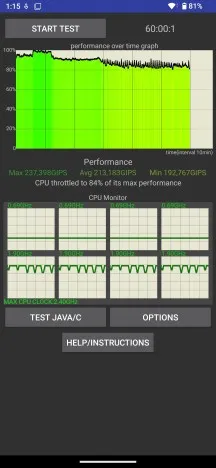
The phone's surface never actually became uncomfortable to touch or hold during our testing, just lukewarm.
Camera - photo and video quality
Camera is same as last year, and that's not a good thing
The Xperia 10 VIII straight up reuses the camera system of the 10 VII - the hardware is the same. That would have been great if the 10 VII was a solid cameraphone - for the money, of course - but it's not how we remember it.
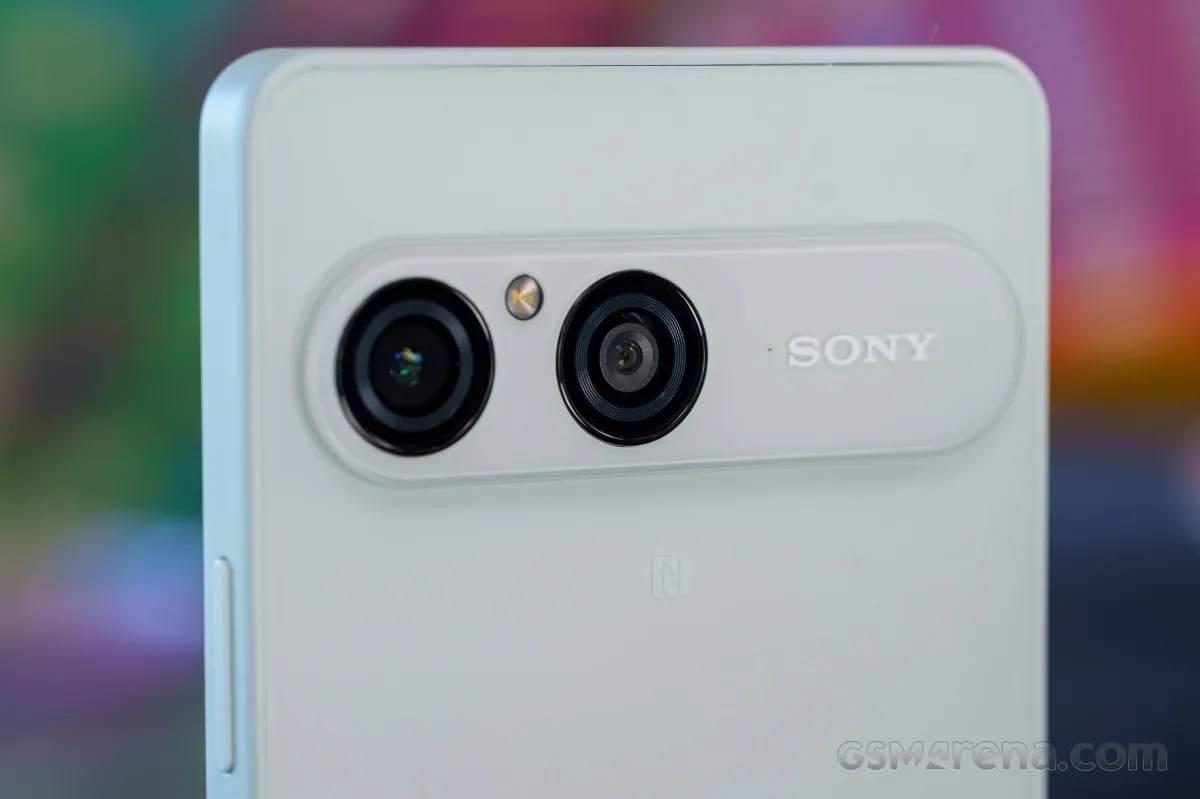
The main camera is a relatively well-specced unit, with a proven (also old-ish, but hey) in-house sensor with a 1/1.56" optical format and a 50MP nominal resolution.
The other two cameras use SmartSens imagers with 13MP resolution on the ultrawide and 8MP on the front-facing one. Both lenses have fixed focus so you can forget about sharp close-ups with either one. The ultrawide is only moderately ultrawide, Sony insisting on the classic 16mm focal length, while the selfie camera lens is a bit narrow for modern trends, at 26mm equivalent.
- Wide (main): 50MP Sony IMX 766 (1/1.56", 1.0µm-2.0µm); 24mm, f/1.9, OIS, multi-directional PDAF; 4K30/1080p60 video recording.
- Ultrawide: 13MP SmartSens SC1320CS (1/3.06", 1.12µm); 16mm, f/2.4, fixed focus; 1080p30.
- Front camera: 8MP SmartSens SC820CS (1/4.0", 1.12µm); 26mm, f/2.0, fixed focus; 1080p30.
Daylight photo quality
Main camera
The main camera captures alright shots, but certainly not ones that will have you raving. Contrast is too high and dynamic range is lacking. Detail is generally very good and it's rendered naturally, but there's a fair bit of noise mixed in with it. Color rendition is on point, with a bit of a reserved take on saturation, that's not necessarily bad.








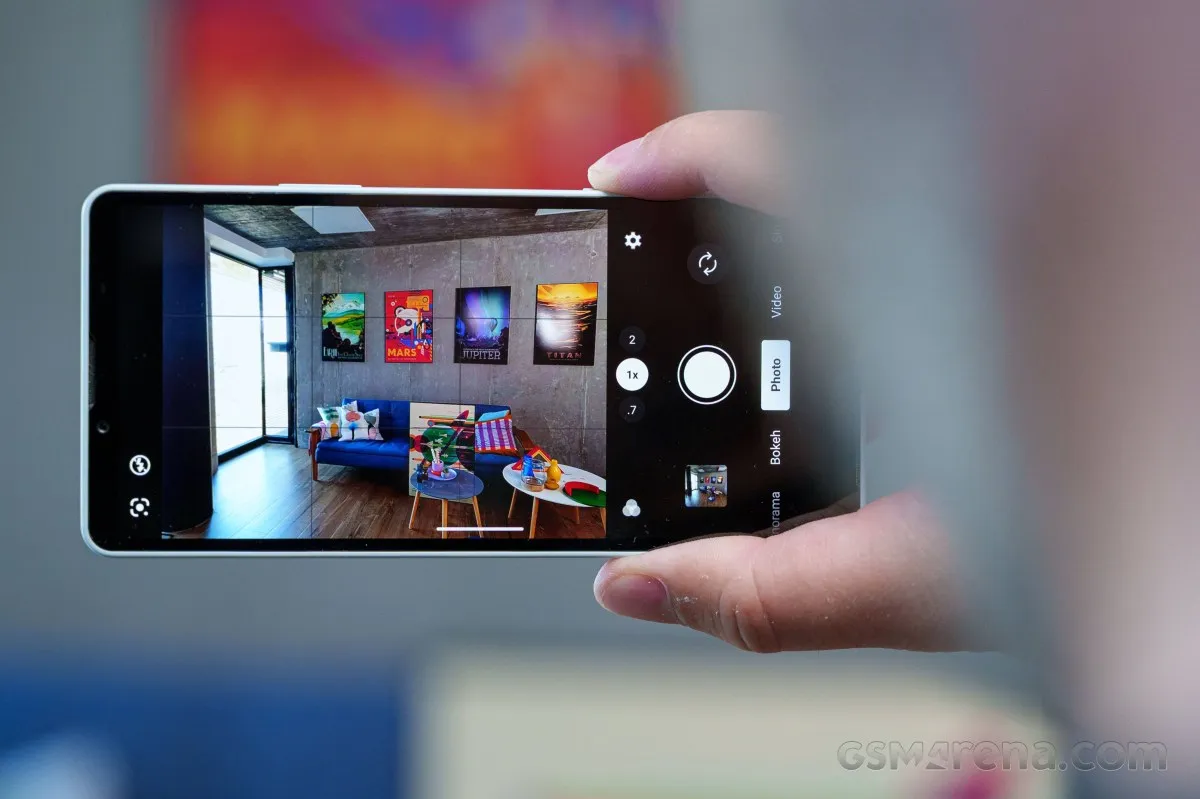
Skin tones on human subjects are rendered well too. The Bokeh mode's results aren't too convincing, with occasional missteps in subject detection and an overall artificial looking blur.








Photos taken at 2x zoom have their flaws - foliage and other random textures look very digital, though more regular shapes remain pretty sharp. Not the best 2x shots, but pretty okay for a midranger.








Bokeh mode doesn't work at 2x zoom, but you can still do some headshots in Photo mode. If you get lucky with the light, they'll be pretty decent, but our results were softer than we'd like most of the time.




If you're into close-ups, perhaps the Xperia 10 VIII isn't quite the right fit. The main camera at 2x zoom is the only sensible option, and the quality isn't too hot.




Ultrawide camera
There's not a lot to like in the ultrawide camera's photos. They're soft and noisy, and dynamic range is limited. Colors are probably the only thing that's not bad about it.








Selfies
The Xperia's selfies are decently detailed, but also riddled with noise. Colors are mostly accurate, but quite lifeless - saturation could use a bump. Low-light selfies are pretty bad overall.








Low-light photo quality
Main camera
The Xperia's rear cameras don't particularly enjoy darkness either. The main camera's colors are often off, perhaps partially due to auto white balance missteps and partially due to aggressive highlight restoration. Detail is decent in the well-lit areas, but it has a gritty digital rendition and there's also plenty of noise in there.








The Xperia 10 VIII features automatic Night mode, which is indicated by a crescent icon that shows up in the viewfinder. You can turn it off in those instances, but there's no way to force it on if the phone doesn't decide it's needed.
At 2x zoom, things are just softer. There's an almost likeable 'I scanned a 30 year-old photo' quality to them, but they're just not objectively good photos.








Ultrawide camera
The ultrawide's low-light photos are pretty tough to look at. They're simply very soft and also quite desaturated.








Video quality
Video recording on the Xperia is limited to 4K30 or 1080p60 on the main camera, while the ultrawide and the selfie camera max out at 1080p30, with no option for 60fps capture. The default codec is h.264, but you can opt for h.265 (HEVC) in settings.
You can hit '> play' below and use the '>| next' button to advance through the playlist of all video samples, or you can watch the full playlist on YouTube.
Daylight videos from the main camera are quite sharp and detailed and they also have pleasing colors. Contrast is dialed way too high though, resulting in crushed shadows and an overall low-end look. The ultrawide has a slightly different take on colors and it's also fairly soft, even for 1080p, plus it maintains the needlessly high contrast.

At night, both cameras struggle in terms of dynamic range and exposure and capture dark footage with blown out highlights and gloomy shadows. The main camera does maintain some semblance of sharpness, at least in the better lit areas, unlike the ultrawide, which is plain unusable.



There's electronic stabilization that's toggled on globally in settings. It works really well on both the main camera and the ultrawide when you're shooting from a fixed position, panning is trouble-free, and even walking shake is handled quite well.
Camera quality verdict
Sony has made no strides forward with the Xperia 10 VIII camera system and it remains a mostly underperforming piece of kit. The main camera is fairly good for daytime stills and video, and maintains some composure at night in both areas. The ultrawide is just about usable for photos in bright daylight, but it's best avoided in the dark altogether. Selfies are flawed, but ultimately acceptable in daylight, but not so much at night.
Final words, our verdict, pros and cons
The competition
The Xperia 10 VIII is only available in a single variant with 8GB of RAM and 128GB of expandable storage. Same as last year's Xperia 10 VII. As you've seen throughout this review, the similarity to last year's model is a recurring theme.
What's not so similar this time around is pricing. The Xperia 10 VIII will launch for €600/£550, which is quite the price hike compared to the €450/£400 launch price of the Xperia 10 VII. Sony appears to have already discontinued the Xperia 10 VII, so we can't even recommend you get that one as a better deal.
Memory and storage prices are up, and this is the reality we live in. Midrange devices arguably have it the worst, as these increases make up a proportionally larger part of their overall cost. We'll probably see other manufacturers tackle the issue in different ways, like downgrading the hardware, for instance. Still, 150 bucks is a serious price increase, and we hope we don't see it across the industry this fall.
Even considering Sony's positioning as a premium brand, we don't think the Xperia 10 VIII makes sense at anything above €350.
As we already mentioned, there are unfortunately very few compact smartphones on the market today, at least from mainstream brands.
That said, the Google Pixel 10a does get as close as possible to these requirements. It is still a relatively compact device with a 6.3-inch P-OLED display that's brighter than the Xperia's. The rest of the specs are in the same rough ballpark as the Xperia 10 VIII, including a 5,100 mAh battery and a decent, if not incredibly powerful, Tensor G4 chipset. Even the Android approach is quite similar here, with a clean, near-AOSP look and feel. Arguably, the Pixel does more with its dual camera setup and extracts more through computational photography prowess, courtesy of Google.
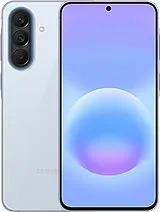

The Galaxy A57 may not be as compact, but it is quite a slim device. Some highlights, of course, include One UI and Samsung's excellent software support promise. You also get a larger and brighter display and a more potent chipset. And it can be found for as low as €310.
The Poco X8 Pro is kind of hard to ignore for its frankly great value proposition. Currently, you can get an 8GB/512GB unit for around €340, and thе storage bump is just one benefit in this case. You also get a very bright, 120Hz, 6.59-inch OLED display, a very powerful Dimensity 8500 Ultra chipset, stereo speakers, a large 6,500 mAh battery with fast 100W charging and a potent dual-camera setup.
Our final suggestion here is the Nothing Phone (4a). This one is interesting. It does have a dedicated 3x telephoto camera, which is pretty nice to see at this price point. And it's not like the rest of the specs are disappointing either. Sure, the Snapdragon 7s Gen 4 is not a powerhouse, but you do get a great display, pretty fast charging and a unique design.
Our verdict
The Xperia 10 VIII is a difficult phone to judge because, taken entirely on its own, it isn't necessarily a bad device. In fact, we could even call it rather unique. There aren't many phones left that combine a relatively compact body with an uninterrupted display, front-facing stereo speakers, a 3.5mm jack, expandable storage, a side-mounted capacitive fingerprint reader and a very clean Android experience.
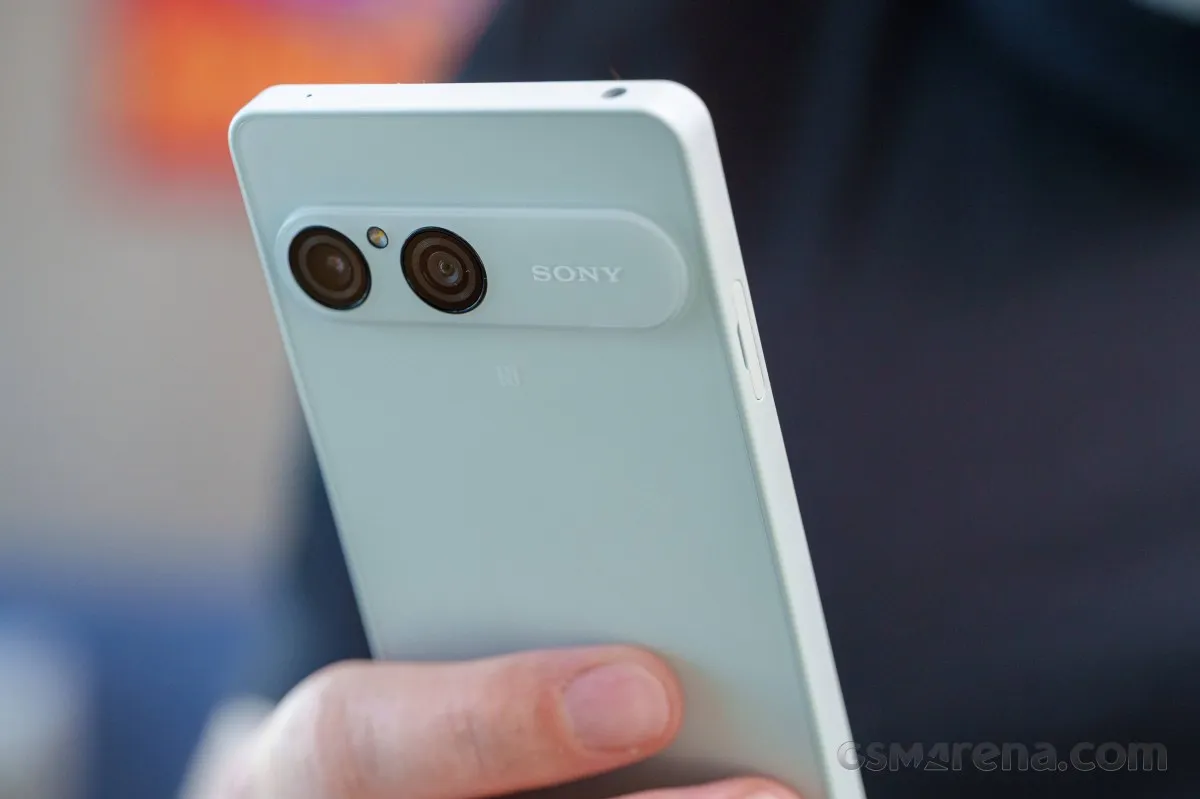
You could argue that Sony's refusal to follow the rest of the industry is entirely deliberate. The Xperia 10 VIII certainly feels like a phone designed for a very particular kind of loyal Sony user, one who still values some of these increasingly rare features and doesn't mind the old-school approach to design and functionality. And viewed through that lens, there is a certain charm to the Xperia 10 VIII.
Unfortunately, charm can only carry a phone so far.
The biggest problem is that Sony has barely upgraded the phone this year beyond the max screen brightness and the speaker quality. Charging remains very slow by current standards, battery life is merely adequate, and the camera system was already struggling to stay competitive last year. Reusing all of it for another year only makes those shortcomings more apparent as the rest of the market continues to move forward.
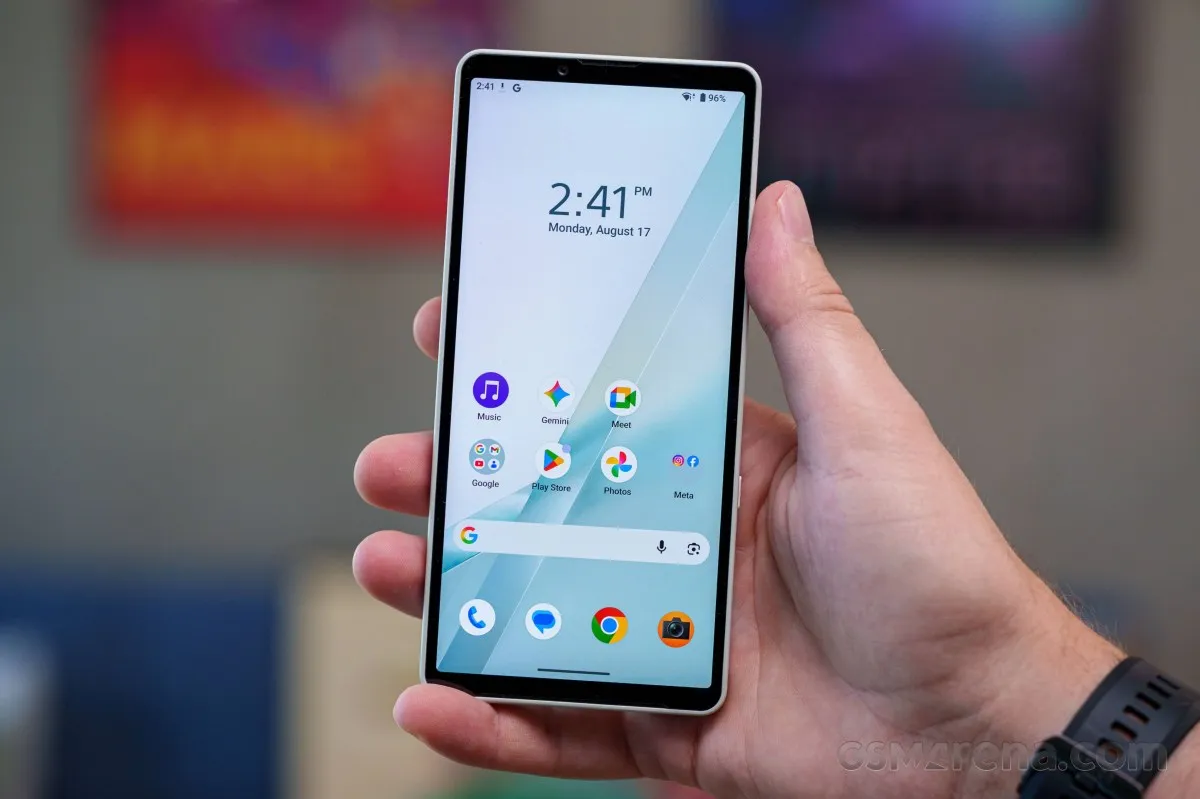
There are still things we genuinely like. The phone is light and pleasantly narrow, has excellent ingress protection, its 120Hz OLED is sharp and now sufficiently bright outdoors, the front-facing stereo speakers work very well for multimedia, and Sony's clean software remains refreshingly free of clutter. The combination of a microSD slot and headphone jack is practically impossible to find, too, and the company's battery-care features remain among the more thoughtful implementations around.
None of that, however, comes remotely close to justifying the price.
At €600/£550, the Xperia 10 VIII isn't merely expensive for what it offers; it finds itself competing with phones that are faster, have better displays, substantially better cameras, larger batteries, dramatically faster charging and, in some cases, better long-term software support as well.
Had the Xperia 10 VIII launched somewhere around the €350 mark, we'd be having a very different conversation. At that sort of price, its compact dimensions and collection of increasingly rare features could make it an interesting niche alternative for the right buyer. At €600, though, it's practically impossible to recommend it. We can only hope the high launch price is temporary and gets adjusted in time.
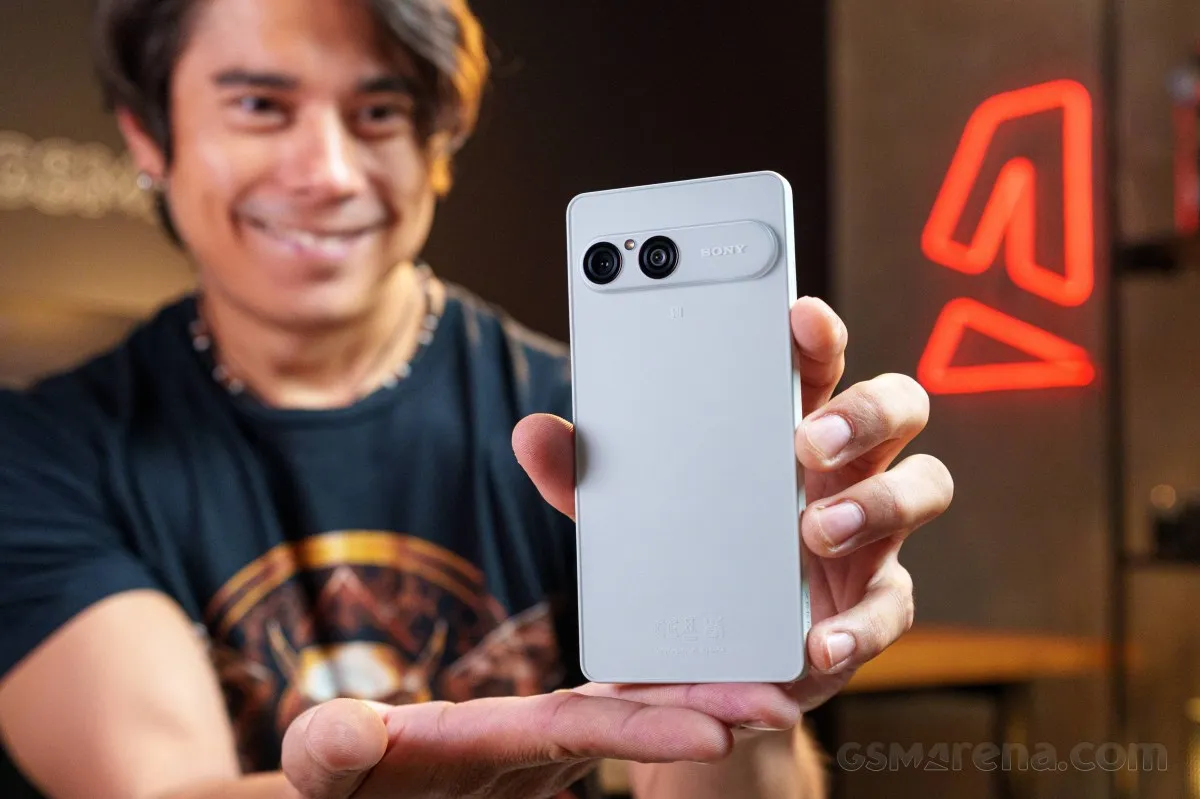
The Xperia 10 VIII is not a bad phone. It is just an almost unchanged phone from last year, entering a market that most definitely hasn't stood still, while somehow asking substantially more money for the privilege. Sony loyalists who specifically want what only an Xperia can offer may still find enough here to be happy. Everyone else should look elsewhere.
Pros
- Compact and lightweight by modern standards.
- Sharp 120Hz OLED display with improved outdoor brightness.
- IP65/IP68 dust and water resistance.
- Front-facing stereo speakers with improved sound quality.
- 3.5mm headphone jack and expandable microSD storage.
Cons
- Expensive at launch.
- Almost no meaningful hardware upgrades over the Xperia 10 VII.
- Battery life is only average despite the modest hardware.
- Very slow charging by current standards.
- Overall camera quality is behind much of the competition.
- Refresh-rate handling remains crude, with especially strange behavior in games.
- Only 128GB of internal storage and no higher-capacity option.